

A portable power station is like a big battery pack with outlets – super handy for off-grid adventures or road trips. But keeping it charged while you’re on the move requires a little know-how. Fortunately, you’ve got a few options: your vehicle’s alternator, solar panels, or even public charging spots. Here’s how to make the most of each:
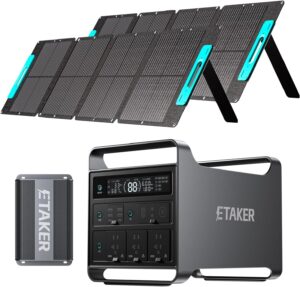

- Alternator Charging (Car Adapter): Every portable power station comes with a 12V car charger cable. This lets you charge the unit from your vehicle’s cigarette lighter/12V accessory port. Essentially, your car’s alternator (which charges your car battery) will also feed the power station. It’s dead simple – plug one end into the power station’s input, the other into your car’s socket. Keep in mind the power is limited by the socket’s fuse, typically around 10 amps or ~120 watts max. That means if you have a 500Wh power station, a couple of hours of driving can charge it roughly halfway (since 120W for 2 hours = 240Wh). For a 1000Wh station, you might get ~20-25% per hour of driving. It’s not blisteringly fast, but it’s free energy while you drive. Tip: Only charge while the engine’s running; otherwise, you’ll drain your car’s starter battery.
- Solar Charging on the Go: If your power station supports solar (most do, via an MPPT input), you can use solar panels even as you travel. For example, some vanlifers mount a solar panel on the roof rack or hood of their vehicle and connect it to the power station in the back seat or trunk. If it’s sunny and the panel is getting light, you’re effectively trickle-charging the station throughout the day. This can be great to constantly offset usage. Portable setups might include unfolding a panel during rest stops or lunch breaks. Even an hour in good sun with a 100W panel can dump ~50-70Wh into your battery. Over a full day of driving with sun, that could be a few hundred Wh – not trivial. Remember, panel output can be less when the vehicle is moving (angle to sun changes, possible shading). If you’re serious about solar while driving, consider fixed panels securely mounted flat – they won’t be optimal angle, but you get continuous input. Or use a flexible panel adhered to your roof. Note: Secure your wiring; use proper grommets if running wires through a firewall or window.
- Dual Input (Alternator + Solar at Once): Some power stations allow charging from multiple inputs simultaneously. For instance, you might be able to use the 12V car charger and the solar input together. Check the manual – many have an upper limit on total watts they can accept (say 180W max from all sources). If yours can do this, you could significantly speed up charging. For example, maybe you get 100W from the car and 100W from a solar panel on the roof – that’s 200W, effectively cutting charge time in half. This dual input capability is a big advantage on travel days.
- AC Inverter in Car: If your vehicle (or RV) has a built-in AC inverter outlet, or if you use a plug-in inverter from the 12V socket, you could also charge the power station via its normal AC charger while driving. This isn’t the most efficient (double conversion losses), but it can work if, say, your power station’s AC charger is faster than the DC input. For example, maybe the DC car input is 8A (96W) but the AC charger is 200W. By running an inverter off your car, you could charge at 200W. However, be cautious: running a big inverter from your car’s 12V can strain the alternator and wiring if not set up for it. Many stock 12V outlets can’t handle more than ~150W safely. If you have a higher-power plug or wire directly to the battery with an inverter, then it’s feasible. Always fuse appropriately. This method is a bit MacGyver-ish, but it’s an option some employ for faster on-the-go charging.
- Charging at Campgrounds or Public Spots: When on a road trip, keep an eye out for opportunities to plug in. If you stop at a campground with electrical hookups for even an hour, you can use the power station’s AC charger to gulp a lot of energy quickly (most can go 0-80% in 1-2 hours if plugged into wall power). Some travelers carry their charger and politely ask at gas stations or cafes – you’d be surprised, sometimes they’ll let you top up your battery while you eat, especially if you explain it’s basically like charging a laptop. Obviously, be considerate and ask permission. But a 30-minute coffee break could net you hundreds of Wh if you find an outlet. Also, libraries or community centers often have outlets in public seating areas where you might unobtrusively charge up (again, like you would a laptop).
- Optimize When Stationary: If you have any chance to fully charge from AC (say before leaving home, or at a friend’s house along the way), take it. Starting off with your power station at 100% gives you maximum freedom. Then, use the above methods to keep it topped off. Ideally, you never let it run completely down. Many people using these in vehicles will plug it into the 12V while driving all the time, so it’s constantly at a high state of charge by the time they park. Essentially, you treat it like an extension of your vehicle’s electrical system – when the engine’s on, it’s charging.
- Monitoring: One great feature of portable power stations is that they often have a display showing input watts. Use this to your advantage. If you’re charging via car and it shows only, say, 50W, maybe your car socket is limited or not making good connection. Some cars have multiple sockets – one might provide more amps than another (like an aux socket rated 20A in the cargo area). Try different ones if available. For solar, tilt panels or eliminate shadows if you see low input. The feedback lets you maximize each method.
- Caution – Heat and Vibration: On the go, your power station might be subject to hot car interiors or bumps. They’re built tough, but it doesn’t hurt to give them a little care: don’t leave them baking in direct sun behind a windshield; ensure it’s in a secure spot where it won’t bounce around (and ideally pad it a bit for shock absorption). Most have thermal protection – if your car is super hot, the station might pause charging until it cools. Just be aware of that.
By mixing alternator and solar charging, and seizing any AC opportunities, you can keep your portable power station happily charged throughout your journey. This hybrid approach means you’ll roll into each campsite or stopover with plenty of juice for cooking, lighting, and relaxing. In short, plan a little, charge often, and you’ll never be left in the dark (or with warm beer, heaven forbid!). Happy travels and happy charging!