

If you’re outfitting an overland vehicle, you’ve likely encountered the debate: Should I install a built-in dual battery system, or use a portable power station? Each approach has passionate proponents, and the right choice depends on your priorities. Let’s compare them head-to-head in the context of overlanding, so you can make an informed decision for your rig.
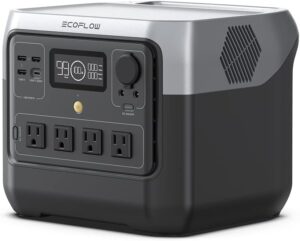

Setup and Installation: A dual battery system typically involves adding a second deep cycle battery (often in your engine bay or somewhere in the cabin/truck bed), plus a battery isolator or DC-DC charger to manage charging from the alternator. It’s a permanent (or semi-permanent) install – involving wiring, fuses, mounts – usually a half or full day project for an experienced DIYer or professional. In contrast, a portable power station is basically a plug-and-play solution. No installation beyond maybe strapping it down so it doesn’t slide. You take it out of the box, charge it up, and it’s ready. So, if you’re not comfortable messing with vehicle electrical systems, the portable unit wins on ease. Dual batteries shine if you’re okay with installation and want everything integrated neatly.
Capacity and Output: Dual battery setups often use large batteries (100Ah or more), giving 1200+ Wh of energy, and if you add an inverter, you can size it to your needs (some go 1000W, 2000W etc.). Portable power stations come in various sizes too, but high-capacity ones (1000Wh+) can be expensive. With dual batteries, you might get more amp-hours per dollar, especially if using cost-effective batteries. However, note that if you want AC power, you’ll need to add an inverter to a dual system, whereas power stations have one built-in. Also, power stations have a rated output limit – e.g., a 500W or 1000W inverter. A built dual system can have an inverter as big as you practically want (just need a bigger alternator to charge and bigger battery bank). So for massive power needs, a custom dual battery with a big inverter might be more effective.
Charging Speed and Sources: With a dual battery, your alternator is the main charger. Many use DC-DC chargers that output 20-30 amps or more, meaning you could be getting 300+ watts of charge while driving, quickly refilling a large AGM or lithium battery. Portable stations charging from 12V typically are limited to around 8-10 amps (96-120W) via the car socket. However, some higher-end stations can take more via Anderson connectors or if paired with dedicated chargers. On solar: both systems can leverage solar well. Dual battery setups often have an MPPT controller connected to the battery – which can be as large and sophisticated as you want. Portable units have MPPT built-in but often capped at a certain input (say 200W or 400W). Dual battery edges out for charging muscle if set up right. But a portable station has the advantage of also being chargeable from AC easily when you find grid power – essentially, it has a built-in charger for wall sockets. With a dual setup, you’d need to connect an external charger at base or camp to do the same.
Portability and Versatility: Obvious point – a power station is portable, a dual battery is bolted in. Why does this matter? If you ever camp away from your vehicle (say, a base camp where your 4×4 can’t reach, or you have a tent a short distance away), you can carry a power station to where you need power. Or use it in a friend’s vehicle, or even at home during a power outage as a backup. It’s an appliance you can repurpose. A dual battery is married to your rig. Conversely, a dual system being fixed means you don’t have to worry about moving or theft when you leave your campsite – it’s all tucked away and part of the vehicle.
Reliability and Maintenance: A dual battery system, if well installed, is very reliable. There’s not much to fail – batteries, a charger, maybe an isolator relay – all proven tech. Portable stations are more complex devices (inverter + battery + electronics). While they are generally robust, there’s a chance a failure could take out your whole power source (since it’s all in one unit). With a dual system, things are more modular – if an inverter fails, your 12V stuff still works, etc. That said, many power stations are built tough for outdoor use. Maintenance-wise, dual batteries (especially lead-acid) might need water topping (if flooded) or periodic checks, and eventually replacement every few years. Lithium dual batteries and power stations both have long lifespans (many cycles) – though one user on a forum humorously called his portable power box “a consumable” because after ~5 years of heavy use, you’ll likely replace the whole unit, whereas with a dual system you might just replace the battery itself and keep the system going.
Cost: This can swing either way depending on components. A basic dual battery with a solenoid isolator is relatively cheap (~$200 plus battery cost). A high-end dual battery with DC-DC charger and lithium battery could run $1000-$2000. Portable power stations around 500Wh-1000Wh capacity often fall in the $500-$1200 range, depending on brand and features. If you already have a solid starting battery and a vehicle that makes charging easy, a simple second battery is cost-effective. But when comparing lithium to lithium, say a 100Ah LifePO4 ($800) + charger ($150) + inverter ($200) vs a 1000Wh station ($1000), it’s not drastically different. The value of convenience with a power station is a big factor in the price.
Upgradability: If your power needs grow, a dual battery system can often be upgraded by just adding another battery (if space allows) or swapping to a bigger one, or adding more solar, etc. It’s quite expandable. A portable station is what it is – if you need more, you either buy a bigger model or an additional unit. Some newer stations allow external extra battery packs (expansion batteries), which somewhat mimics the expandability of a dual system, but those are brand-specific and costly.
Use Case Considerations: Overlanders who undertake long expeditions or international travel might lean towards dual battery because it’s one less electronic gadget to worry about, and it’s always there doing its thing. People who do weekend trips or have multiple roles for their power unit (like sometimes in the car, sometimes for camping, sometimes at home) might prefer a portable unit for flexibility. Also, if you lease your vehicle or don’t want to modify the electrical system heavily, a portable station avoids all that.
Combined Approach: It’s worth noting some people do both – e.g., have a dual battery for core needs (fridge, vehicle-mounted lights) and also carry a portable power station for peripheral needs or as backup. The dual battery could even charge the portable unit during drives. This provides redundancy – if one fails, you have the other.
In conclusion, effectiveness depends on what you value:
- If you want maximum efficiency and integration and don’t mind installing, a dual battery system might be more effective. It’s always charging when you drive, you can draw more power for heavy-duty uses, and it’s out of sight.
- If you want ease, flexibility, and no-install convenience, a portable power station is highly effective. It’s literally an out-of-the-box solution that you can use in various scenarios beyond just your vehicle.
Many overlanders swear by dual batteries as “set it and forget it” reliable solutions. Many others love the simplicity of grabbing a Jackery and hitting the road. Neither is wrong – it’s about what makes your adventure smoother. Consider how you travel, what you use power for, and even your comfort with tech installation. That will guide you to the solution that’s most effective for you.