

A weekend camping trip shouldn’t mean weekend phone outages. Picture yourself in the woods with a campsite lit up, phones and cameras charged, and even a mini-fridge running – all without worrying about a dead battery. That’s the freedom mid-range portable power stations (priced under $500) can offer. These power packs have surged in popularity (the global portable power station market was valued around $600 million in 2024), especially among campers – an estimated 86 million U.S. households consider themselves campers. For anyone not ready to splurge on a high-end generator, mid-range models strike a balance between capacity and affordability. They’re potent enough to keep essential devices going off-grid or during a blackout, yet come at a reasonable price. Let’s explore some of the best mid-range options and what makes each shine.
| Product Name | Image | Check Amazon Price and Reviews |
|---|---|---|
| Jackery Explorer 500 |  | |
| BLUETTI EB70S | 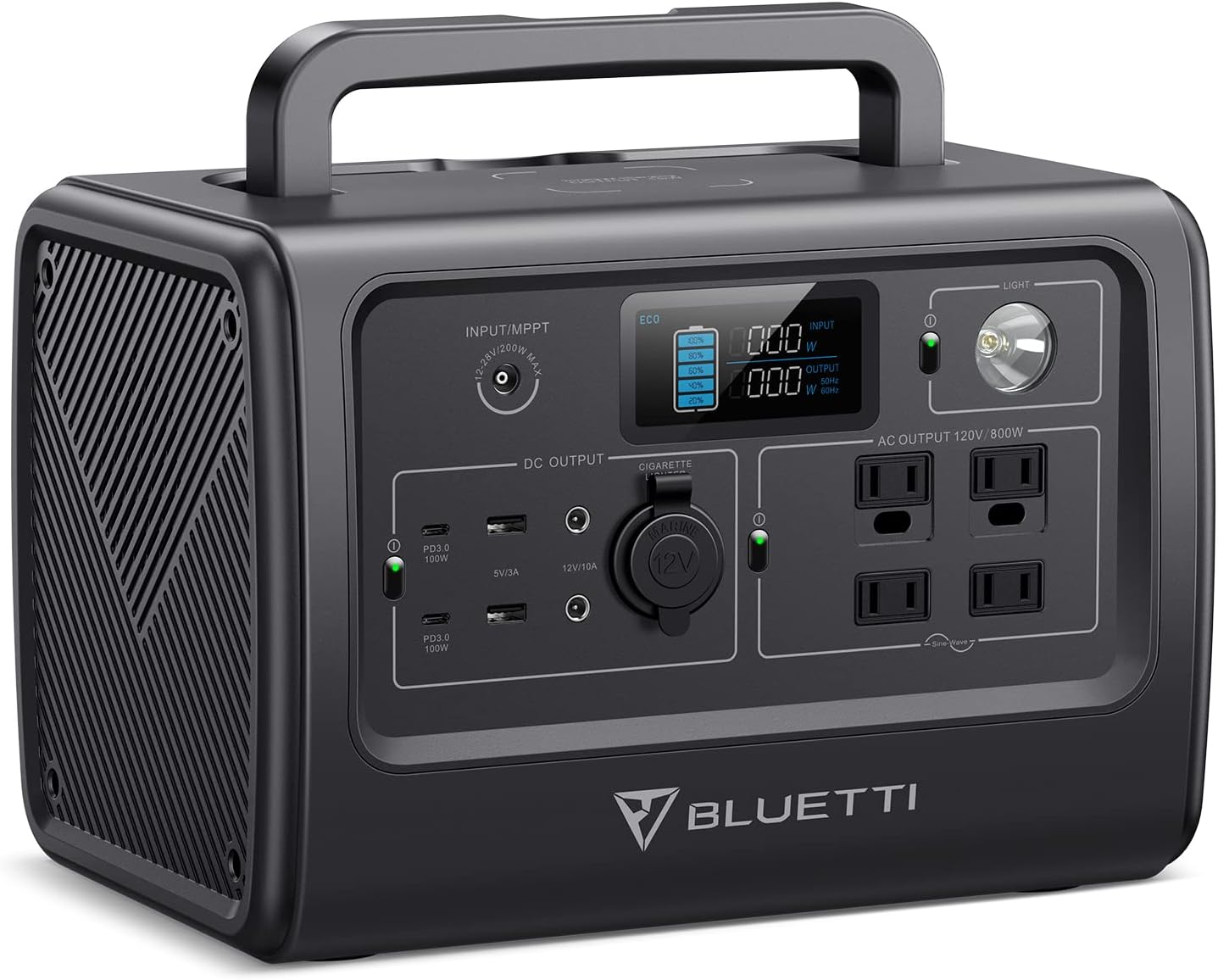 | |
| EcoFlow River 2 Max |  | |
| Anker 535 PowerHouse |  | |
| Goal Zero Yeti 500X |  | |
| Rockpals 500W Portable Power Station |  |
Contents
Jackery Explorer 500 (518Wh, 500W)


Key Features:
- Capacity & Output: 518 Wh battery capacity and 500 W AC continuous output (1000 W surge) – enough to run a TV (~60W) for 7+ hours or a 50W fan for ~8.8 hours.
- Multiple Outputs: 1 AC outlet, 3 USB-A ports (5V 2.4A), 2 DC ports + 12V car socket. Pure sine wave inverter safe for electronics.
- Portable Design: Integrated carry handle, relatively light at ~13 lbs. Durable plastic shell built for outdoor use.
- Easy Charging: Recharges in ~7.5 hours from wall (AC), about 8 hours via car, or ~9 hours of good sun with a 100W solar panel.
- LCD Display: Simple screen shows battery percentage, input/output watts – easy to check status at a glance.
Description: The Jackery Explorer 500 is practically a household name in portable power. With a 518 Wh battery (lithium-ion) and a 500 W pure sine wave inverter, this bright-orange box is built to juice up your essentials on camping trips or during emergencies. It weighs about 13.3 lbs, making it grab-and-go friendly. The Explorer 500 provides one AC outlet (110V), three USB-A ports, and two 12V DC outputs, covering most gadget charging needs. While it doesn’t have USB-C PD or app connectivity – it’s a somewhat no-frills unit – its strength is reliability and simplicity. Jackery’s robust build quality and battery management means the Explorer 500 will hold charge well and deliver stable power. It can charge via wall, car, or solar (supports up to 100W solar input). Jackery has sold over 3 million units globally since 2018, and the Explorer 500’s enduring popularity shows why: it’s a mid-range workhorse that just gets the job done.
BLUETTI EB70S (716Wh, 800W)


Key Features:
- High Capacity: 716 Wh LiFePO₄ battery for extended runtime and 2500+ charge cycles (lasting years of regular use).
- Strong Inverter: 800W continuous (1400W surge) pure sine wave – runs devices others in this class can’t, from blenders to power tools (under 800W).
- Abundant Outputs: 4× AC outlets, 2× 100W USB-C (fast charge laptops), 2× USB-A, 2× 12V DC ports, 12V car socket, and a wireless charging pad for Qi devices.
- Built-in Lighting: A handy LED flashlight panel on the front with SOS mode – useful for camping or power outage illumination.
- Rapid Recharge: Accepts up to 200W solar or AC, recharging the unit in as fast as 4 hours. Also supports dual input (AC+solar) for even quicker top-ups.
Description: The BLUETTI EB70S pushes the limits of “under $500” with its generous 716 Wh LiFePO₄ battery and 800 W inverter – a high-capacity, high-output combo rarely seen in this price bracket. This power station is a favorite for camping and backup power thanks to its long-lasting LFP battery (2500+ cycles to 80% life) and array of ports. It offers 4 AC outlets (really!), 2 regulated 12V DC outputs, a car port, dual 100W USB-C PD ports, USB-A, and even a 15W wireless charging pad on top for phones. Weighing about 21.4 lbs, the EB70S is heavier than some competitors (the price of a bigger battery), but still portable with a folding handle. It can run larger appliances that 500W units might not – for instance, its 800W output can handle a small coffee maker or electric grill (briefly). Fast recharging is another plus: about 4-5 hours via the included AC adapter or solar (supports up to 200W solar input). If you want maximum watt-hours under $500, the EB70S delivers in spades, making it ideal for longer trips or heavier gadget use.
EcoFlow River 2 Max (512Wh, 500W)


Key Features:
- Fastest Charging: Charges via AC in ~1 hour (one of the fastest in class) – an empty to 80% in 50 minutes feat that means less waiting.
- Long-Life Battery: LiFePO₄ cells rated for ~3000+ cycles (you can use it daily for 8+ years and still have ~80% capacity).
- Smart Control: EcoFlow app connectivity for real-time input/output info, setting AC output levels (X-Boost), and firmware updates.
- Multiple AC Outlets: Four AC sockets let you power several devices at once (unique in this size class).
- X-Boost Mode: Can allow the 500W inverter to run appliances up to 1000W (with reduced voltage) – useful in a pinch for devices like a 700W toaster or hair dryer, though not at full power.
Description: The EcoFlow River 2 Max is a techie’s mid-range dream. It features a 512 Wh LiFePO₄ battery (with an ultra-long 3000-cycle life) and a 500 W inverter, all packaged in a sleek 13.4 lb unit. The River 2 Max’s headline feature is extremely fast charging – thanks to EcoFlow’s X-Stream charging, it can go 0 to 100% in about 1 hour from a wall outlet. That’s incredibly convenient if you’re in a hurry. This power station also pairs with a smartphone app via Bluetooth/WiFi, letting you monitor and control it remotely (geeky, but useful). It has 4 AC outlets (500W total, 1000W surge, and supports a 1000W “X-Boost” mode for some appliances), 2 USB-C (one 100W for laptops), 2 USB-A, and a 12V car port. In the mid-range segment, the River 2 Max stands out for its advanced battery management and output flexibility. Planning an off-grid weekend? It’ll happily charge your drone batteries, run a mini projector for movie night, or keep a portable fridge cooling. And with regulated 12V output, it’s friendly for sensitive 12V gear like portable coolers. Overall, EcoFlow blends innovation and practicality here, making the River 2 Max one of the most versatile sub-$500 options.
Anker 535 PowerHouse (512Wh, 500W)


Key Features:
- Long-Lasting LFP Battery: LiFePO₄ battery with ~3000 cycles – lasts 6× longer than standard lithium-ion batteries, ideal for heavy use.
- Balanced Output: 500W pure sine inverter (750W surge) across 2 AC outlets, sufficient for appliances like small blenders, projectors, or medical devices.
- Device-Friendly Ports: 60W USB-C Power Delivery port (fast charge laptops, etc.), plus three USB-A (5V/3A) for multiple gadgets, and car socket for 12V devices.
- Informative Display: LCD shows input/output wattage, battery percentage, and time-to-empty/full – helps manage your usage efficiently.
- Ultra-Reliable Brand Support: Backed by Anker’s reputation and a 5-year warranty, reflecting its confidence in the unit’s durability.
Description: The Anker 535 PowerHouse offers a solid middle-ground for those who want dependable performance from a trusted electronics brand. It provides 512 Wh of capacity and a 500 W inverter, housed in a clean gray-blue case with a sturdy handle. Notably, the Anker 535 uses LiFePO₄ battery chemistry – giving it 3,000+ charge cycles (about 6× the longevity of typical lithium-ion packs). Port-wise, you get 2 AC outlets (500W total), 1 USB-C PD port (60W), 3 USB-A ports, and a 12V car outlet. The inclusion of a 60W USB-C is great for fast-charging phones and tablets, though some competitors offer 100W USB-C. One thing Anker emphasizes is build quality and safety: the 535 has a fire-resistant exterior, temperature and short-circuit protections, and a quiet cooling fan that only spins up when needed (Anker rates it around 30dB, library-level quiet). Weighing ~16.5 lbs, it’s a tad heavier for the capacity, likely due to the durable LFP cells and robust internal structure. If you’re after a mid-range unit for frequent use – say, running a CPAP every night or daily outdoor work – the Anker 535’s long-life battery and 5-year warranty provide extra peace of mind.
Goal Zero Yeti 500X (505Wh, 300W)


Key Features:
- Rugged Design: Proven in field use – solid housing with protective edges, built to endure camping, construction sites, and general abuse.
- Regulated 12V Outputs: Ideal for running 12V coolers, CPAPs, or lighting without voltage drops (a common issue in lesser power stations).
- Efficient Usage: The 300W inverter means less overhead drain; the Yeti can often yield more real runtime from 505 Wh for low-power devices compared to higher-watt units.
- Expansion Option: Compatible with Goal Zero’s MPPT module (sold separately) to improve solar charging efficiency, and with the Yeti Tank system for adding external batteries (for the tinkering enthusiasts).
- Brand Support: Backed by Goal Zero’s excellent customer support and a robust community of users – you’re buying into a well-established ecosystem of accessories and tips.
Description: The Goal Zero Yeti 500X is an outlier in this list: it costs around $699 (often on sale under $500), packs a 505 Wh battery, but its inverter is only 300 W. Why include it? Goal Zero is a premium brand known for rugged, reliable power stations, and the 500X (released as part of their earlier lithium line) exemplifies that build quality. It’s a compact, durable 13 lb unit with a rubberized corner bumpers and an IPX2 weather-resistance rating. The Yeti 500X’s lower 300W output means it’s not for high-draw appliances, but it handles all your low-power needs with ease and efficiency. It has 2 AC outlets (120V, 300W), 2 USB-A, 1 USB-C PD (60W), 1 USB-C QC (18W), a regulated 12V car port, and 6mm 12V ports. One standout feature: Goal Zero’s 12V outputs are regulated at 13.6V, so devices like portable fridges get consistent voltage. The Yeti’s display is simple but effective, showing input/output watts and battery percentage. If you prioritize ruggedness and don’t need more than 300W, the Yeti 500X is a safe choice. (Goal Zero has since released an updated Yeti 500 with 500W output for ~$500, but the 500X remains a solid mid-range pick when discounted.)
Rockpals 500W Portable Power Station (540Wh, 500W)

Key Features:
- Affordable Mid-Range: Typically priced well under $500, making high-capacity portable power more accessible.
- Ample Capacity: ~540 Wh can charge smartphones 40+ times or run a 60W TV for ~7-8 hours.
- Multiple USB Outputs: 5 USB ports (including QC3.0 and USB-C) to keep all your devices charged without needing adapters.
- Device Protection: Features overload, over-temperature, and short-circuit protections. The inverter will automatically shut off to prevent damage if you exceed 500W – useful for safety (just be mindful not to plug in a 700W coffee maker, for example).
- Emergency Light: Integrated LED flashlight with SOS mode – handy for camping or power outage lighting.
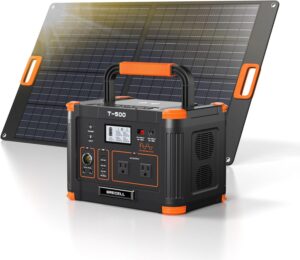
Description: If you’re looking for bang-for-buck in the mid-range category, Rockpals offers a compelling 500W power station that often comes in noticeably cheaper than big-name brands. This model provides a ~540 Wh lithium battery and a 500 W inverter, covering the basics for camping, tailgating, or emergency prep. Design-wise, it’s a nondescript gray/black box with a sturdy handle – not winning style points, but fairly compact for the capacity. It includes 2 AC outlets, 4 USB-A ports (one QuickCharge 3.0), 1 USB-C PD (30W), and a 12V car socket. The Rockpals 500W features an LCD screen for battery and wattage, and a built-in LED flashlight. At ~12 lbs, it’s lighter than some comparable units, partly due to a more minimal casing. While Rockpals isn’t as famous as Jackery or EcoFlow, it has a loyal following among budget-conscious users who report good performance for the price. This unit can run mini fridges, laptops, fans, lights, and charge up a slew of gadgets reliably. You do sacrifice some things: charging is slower (about 8-9 hours AC), and long-term cycle life may be lower. But as an affordable mid-range station, Rockpals hits the sweet spot for occasional use or as a starter unit.