

Imagine a wildfire forcing you to evacuate your home – the power is out, but at an evacuation center, a quiet box keeps phones charged and medical devices running. During the 2020 wildfires in California, portable power stations were deployed to provide electricity for evacuees’ essentials. These handy gadgets aren’t just for disasters. With the average U.S. household experiencing about 5.5 hours without power in 2022, more people are turning to portable power stations as a lifeline. Whether you’re camping off-grid or preparing for storms, a portable power station can be your reliable backup when the lights go out.

What Exactly Is a Portable Power Station?
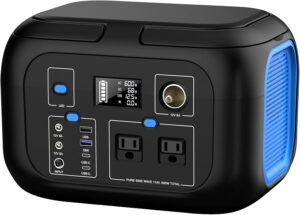
A portable power station is essentially a high-capacity rechargeable battery pack built into a compact device that can provide off-grid electricity. In short, it’s like a bigger, more powerful version of the battery in your laptop or phone. But unlike a small USB power bank that only charges phones, a portable power station has AC outlets and DC ports – similar to the wall outlets in your home or a car charger – so it can run a wide range of devices and appliances.
Think of it as a compact electric generator that stores energy in advance. It combines a large lithium battery pack with an inverter (which converts the battery’s DC power into AC for standard plugs) and multiple output ports in one all-in-one unit. This design means you can plug in devices like lamps, fans, mini-fridges, laptops, phones, or even medical equipment, and power them using stored battery energy. Smaller portable power stations (sometimes called “solar generators” when paired with solar panels) might run your phone and camera on a camping trip, while larger models can keep critical home appliances running during an outage. Lighter models under 10 lbs are great for camping or tailgating, and bigger models (50+ lbs on wheels) can even serve as a home backup power source during emergencies.
In essence, a portable power station provides electricity on-the-go using a rechargeable battery. There’s no gasoline, no fumes, and no noise – just stored electrical energy ready to use. Modern units often feature informative displays (showing battery level, input/output watts) and even smartphone apps for monitoring, but at their core, they are simple: charge it up, then take it anywhere to run your devices.
How Does a Portable Power Station Work?
- Storing Energy in a Big Battery: At the heart of every portable power station is a large lithium-ion battery pack (or newer lithium iron phosphate for longer life). You charge up this battery in advance, and it stores electricity as chemical energy. You can charge the station from a wall outlet at home, a car’s 12V socket while driving, or even connect compatible solar panels to recharge from the sun. Charging it is as easy as plugging it into the wall or setting up a solar panel – and many units support all three charging methods for flexibility.
- Converting Battery Power to Usable Power: The stored energy in the battery is DC (direct current), but most appliances use AC (alternating current) like your home outlets supply. That’s where the built-in inverter comes in. The inverter converts the DC battery output into AC power, producing a standard 110V (or 220V depending on region) AC outlet on the device. Essentially, the inverter “makes” the same kind of electricity your wall outlet provides, so you can plug in things like a fan, a laptop charger, or a small microwave and they’ll run normally (as long as you don’t exceed the power station’s limits).
Meanwhile, the unit also typically includes DC output ports – things like USB-A and USB-C ports for charging phones and tablets, a 12V “cigarette lighter” car port for coolers or car pumps, etc. Those allow you to power devices directly from the battery without conversion when appropriate, which can be more efficient.
- Power Management and Safety: Inside the device, a Battery Management System (BMS) keeps the operation safe. The BMS is like a brain that monitors the battery’s health, prevents overcharging or over-discharging, and manages temperature. This ensures the power station delivers stable power and helps extend its lifespan. Many power stations also have fans and cooling systems that kick in if you draw a lot of power (so you might hear a quiet fan when running a heavy load).
- Using the Power: To use a portable power station, you simply plug your device into one of its outlets or ports and turn the power station on. The stored energy then flows to your device. For example, if you plug in a 60-Watt laptop, the station’s inverter supplies the AC power for it, drawing down the battery as the laptop consumes energy. Most stations have a screen that shows, say, “60W output” and might estimate “5 hours remaining” (depending on battery size and current load). You can run multiple devices at once as long as the total wattage is within the power station’s output limit. Many models have a pure sine wave inverter, which provides clean, smooth electricity that’s safe for sensitive electronics like computers or CPAP machines.
- Recharging: Once the battery is depleted, you’ll need to recharge the unit from AC, car, or solar. Charging times vary – some modern stations boast fast charging (0–80% in an hour or two from wall AC), while charging from solar depends on panel wattage and sunlight. Unlike gas generators, you can also recharge for free via solar in many cases, making it convenient for off-grid use.
Real-World Example: Suppose you have a 500Wh portable power station (mid-sized). If you plug in a 50W camping fan, in theory it could run about 10 hours (500 Wh / 50 W = 10 hours). In practice, a bit less due to inverter losses (most inverters are ~85–90% efficient). If you also charge a phone and run a 5W LED light, those add to the load. The power station’s display would show the combined wattage and you’d see the battery percentage tick down over time. When it gets low, you might recharge the station with a solar panel during the day, then continue using it at night – that’s the basic cycle of how these work.
Key Benefits and Use Cases
One huge appeal of portable power stations is versatility. Because they supply quiet, fume-free electricity, you can use them in situations where a traditional gas generator would be impractical or unsafe:
- Indoor Safety: Since they run on batteries, portable power stations produce no exhaust, no carbon monoxide, and very little noise. That means you can safely use them indoors, in a tent, or in an RV. By contrast, gas generators must stay outside due to toxic fumes and loud operation. If your power goes out in a winter storm, you can bring a portable power station into the living room to run a space heater or charge phones, without worrying about ventilation.
- Emergency Backup Power: For home use during blackouts, a portable power station can keep essential devices running. While smaller units might just keep your phone and a lamp going, larger stations (1000Wh and above) can power a refrigerator for several hours or run medical devices like oxygen machines in a pinch. During Hurricane Harvey’s aftermath in Texas, for example, portable power stations helped keep communications equipment online for first responders. They are a clean backup solution when grid power is knocked out by storms, wildfires, or other disasters.
- Camping and Outdoor Adventures: Campers, RVers, and off-grid cabin enthusiasts love these devices. Instead of draining your car battery or having to hear a noisy generator, you can quietly run campsite gadgets. String up lights, recharge cameras, or even make coffee with a small electric coffee maker – all from a battery the size of a toaster. Many portable power stations are designed for camping, with sturdy handles for carrying and maybe even built-in LED lights. They let you enjoy modern comforts (like a mini-fridge or electric fan) in the great outdoors, which can be a game-changer for family camping trips or remote work in nature.
- Work Sites and DIY Projects: Need to use power tools in a location without outlets? A portable power station can drive tools like drills, circular saws, or electric lawn equipment, provided the station’s output wattage is high enough. For example, a 1000W power station can likely run a 700W drill. Professionals doing on-location photography or construction in remote areas use these to power lights, cameras, or chargers. Unlike a big generator, a battery station doesn’t require fuel or lengthy setup – just push a button and you have power.
- Travel and RV Living: In an RV or van, a portable power station can supplement or replace a built-in generator. You can charge it from the vehicle while driving or via solar panels on the roof. This can run your small appliances at a campsite without hookups – think making toast in the morning or running a fan at night. Because it’s silent, it won’t disturb you or nearby campers.
- Environmental Friendliness: Using stored electrical energy means no fuel burned on-site, which is better for the environment and your lungs. If you recharge it with solar panels, you have a mini renewable energy system – truly off-grid and green. This has made portable power stations popular among eco-conscious users and those looking to reduce reliance on gas.
In summary, a portable power station works by charging up a big internal battery (from an AC outlet or solar), then converting that stored power into usable electricity for your devices via built-in outlets. It’s a plug-and-play solution: charge it, take it anywhere, and power your life. From camping under the stars to bridging the gap in a blackout, these devices offer a convenient and safe way to keep the power flowing without the noise, fumes, or fuss of traditional generators.