

A portable power station for less than a hundred bucks? It sounds like a tall order – after all, these devices pack batteries, inverters, and ports – but there are indeed some ultra-budget options out there. While you shouldn’t expect massive capacity or high wattage at this price, a sub-$100 portable power station can be a handy companion for small tasks like charging phones, powering LED lights, or running tiny electronics during camping or emergencies. In this guide, we’ll explore the best budget-friendly portable power stations under $100, highlighting their features and what they can realistically do. We’ll keep it honest – at this price range, we are mostly looking at small “power banks on steroids”, but depending on your needs, they might just do the trick.
| Product Name | Image | Check Amazon Price and Reviews |
|---|---|---|
| HOWEASY 88Wh Portable Power Station | 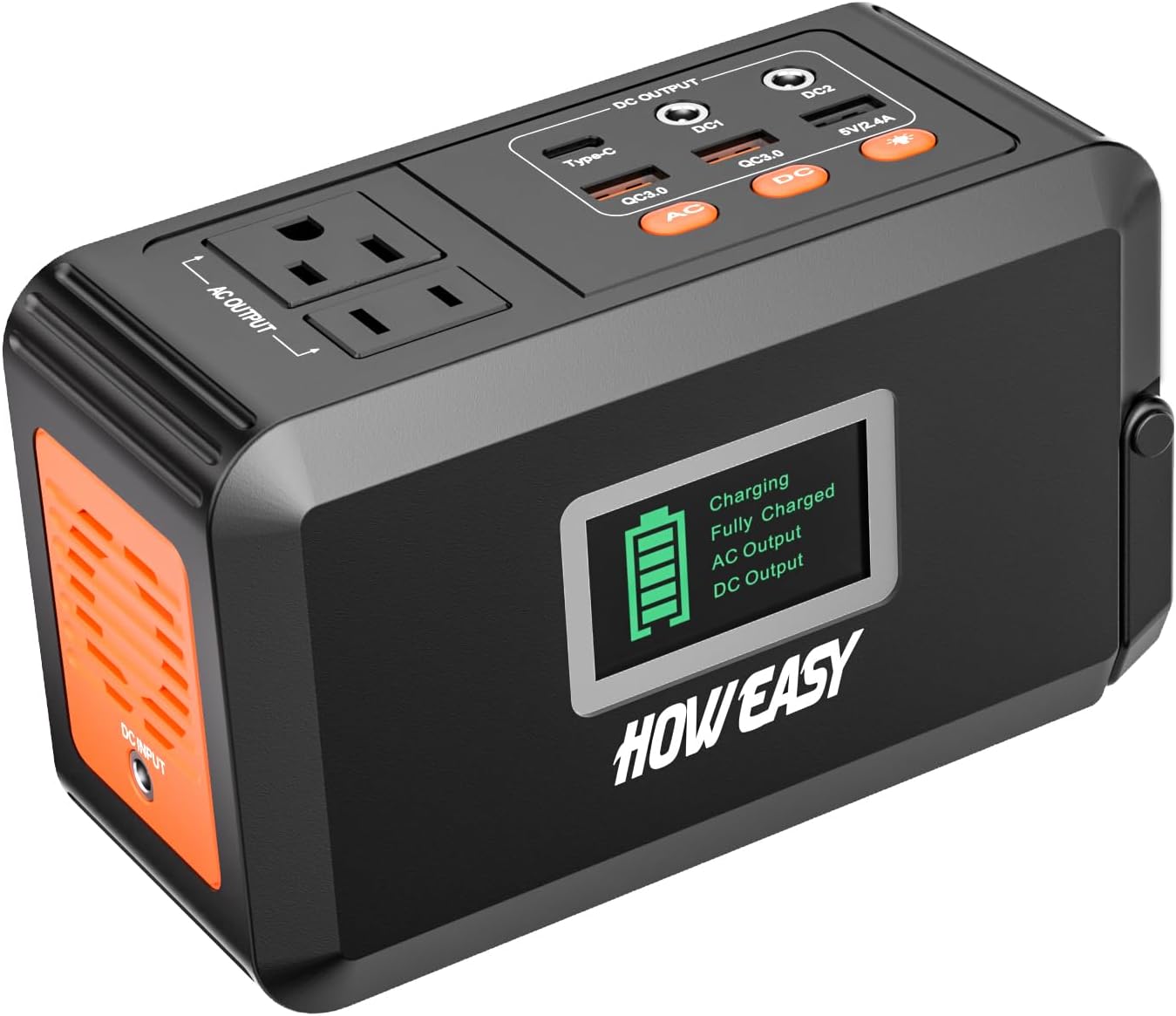 | |
| FlashFish 200W (151Wh) Portable Power Station | 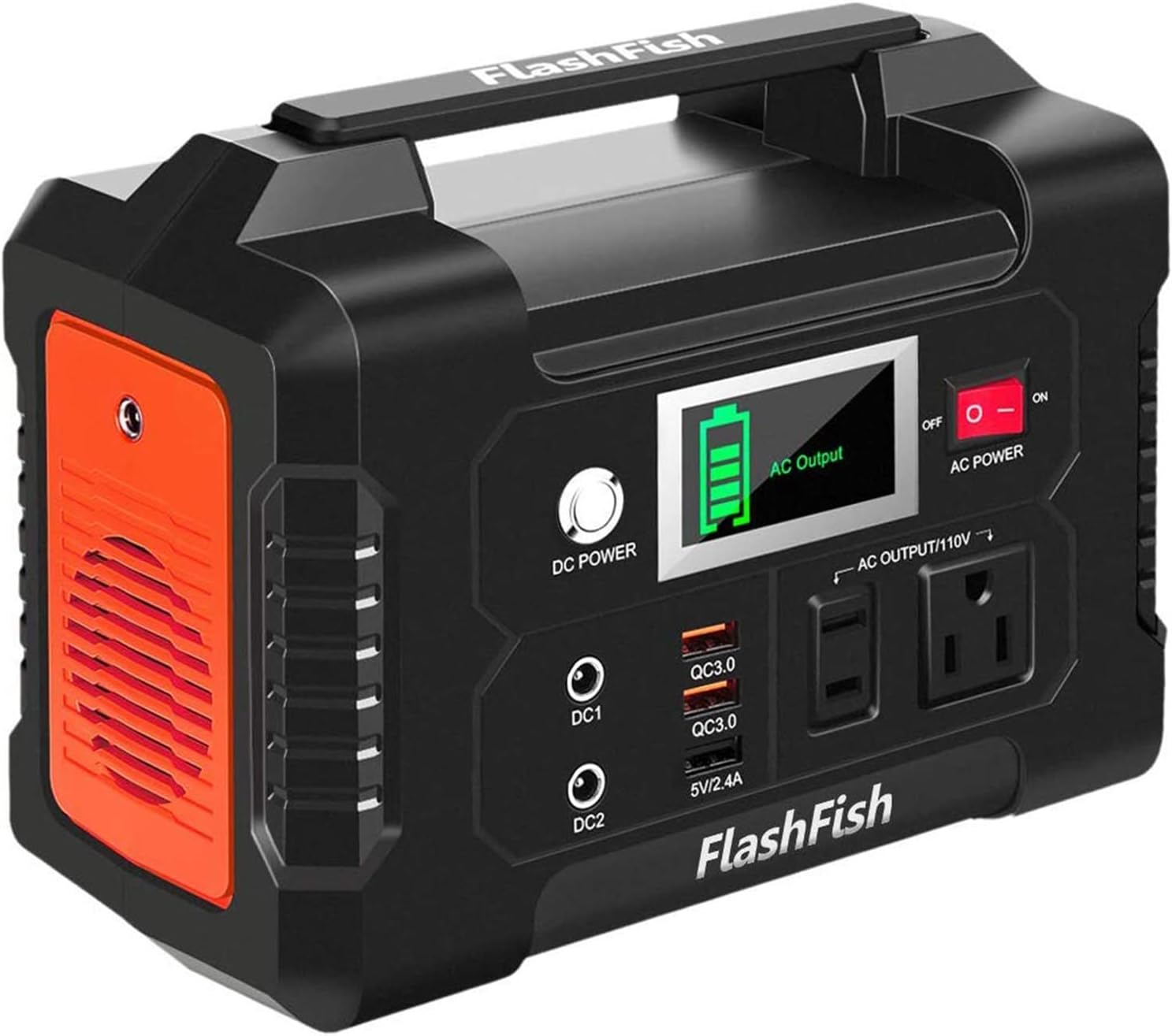 | |
| BLUETTI AC2A (204Wh) | 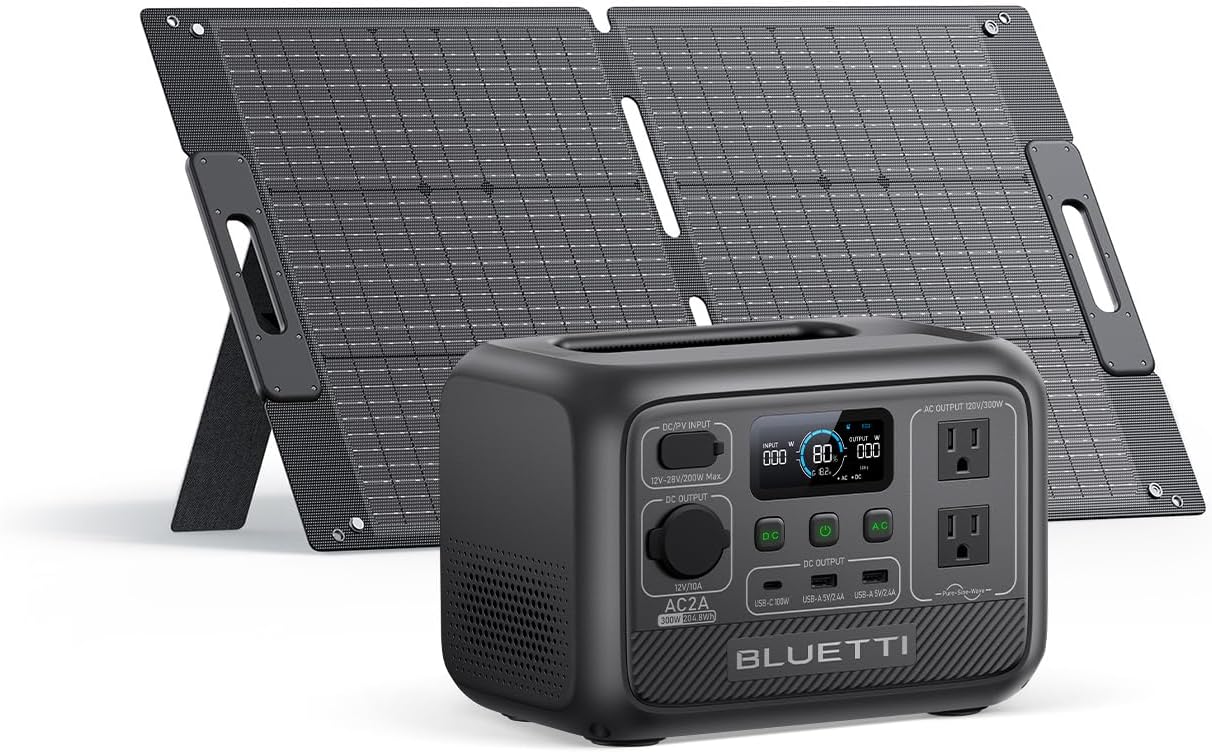 | |
| Marbero 167Wh Portable Power Station | 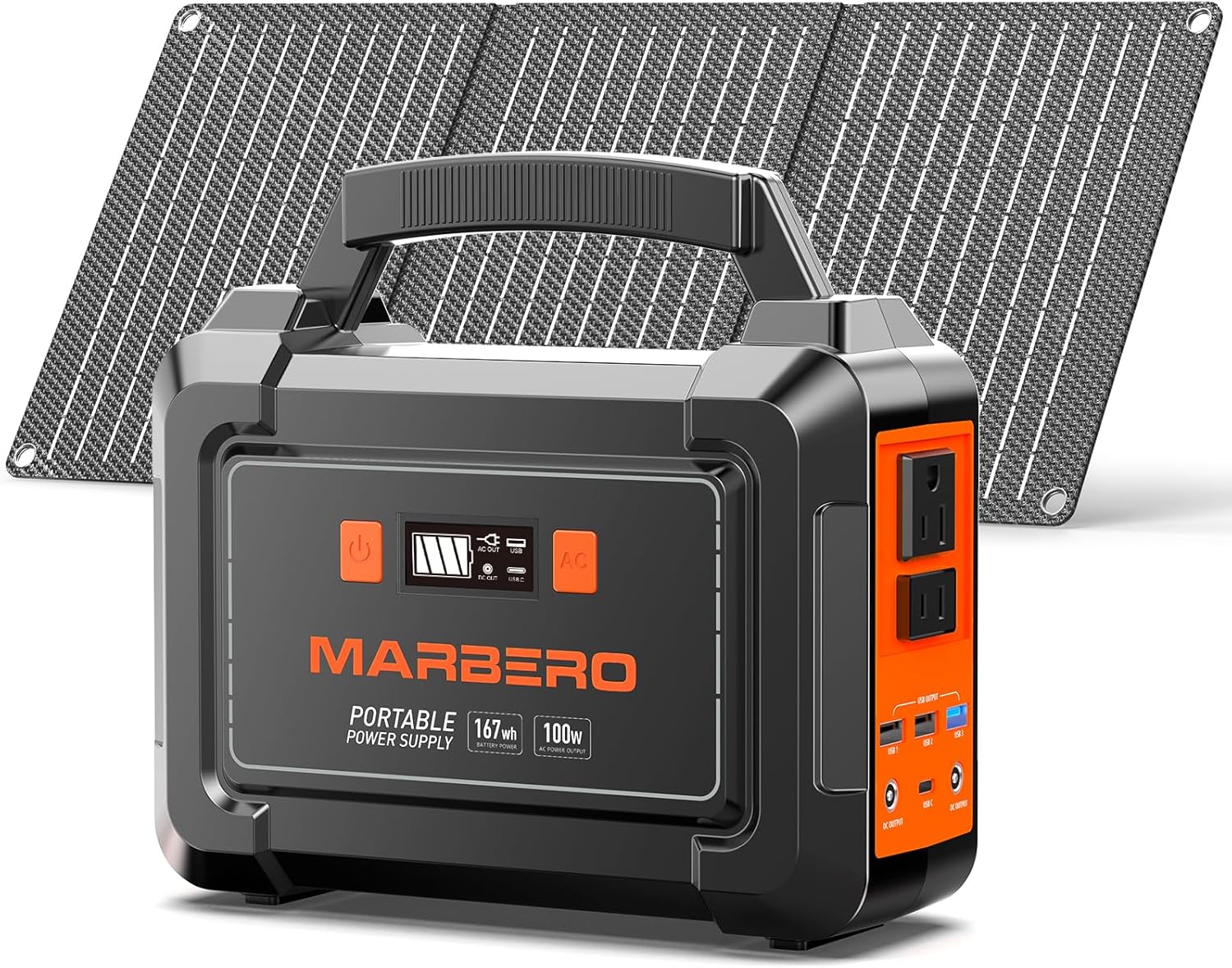 |
What Can You Expect for Under $100?
First, let’s set expectations. Under $100 portable power stations are typically in the 80Wh to 200Wh range in terms of battery capacity, and have modest AC inverter outputs (often around 100W, maybe up to 150W). These are not for running home appliances or heavy duty tools – forget about microwaves, fridges, or power drills. Instead, think: – Charging smartphones, tablets, cameras (multiple times). – Keeping a laptop running for a few extra hours. – Powering small 12V devices or a CPAP for a short duration (some of these have 12V DC outputs). – Running LED strip lights or a small fan while camping. – Perhaps a portable projector or router for a bit.
They often include multiple USB ports, maybe a USB-C, a DC car port, and a single AC outlet for low-watt items. For example, a small 100W AC outlet could run things like a Wi-Fi router, a baby monitor, or charge a drone battery, but likely not simultaneously for long.
The good news: lower capacity means they’re light and really easy to carry, and charging them up doesn’t take too long. Many can recharge via solar (50-100W panel) as well, making them little solar generators for off-grid short trips.
Now, let’s dive into the top picks in this budget category:
Contents
1. HOWEASY 88Wh Portable Power Station
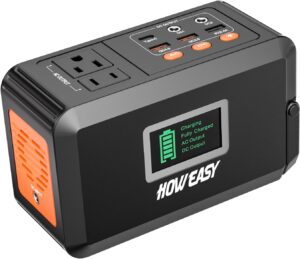

One of the best-known ultra-budget units is the HOWEASY 88Wh power station (often just listed as 88Wh solar generator). It typically costs around $80-$90 and provides a lithium battery of 88.8Wh (that’s 24,000mAh at 3.7V). It has a 150W peak/100W continuous AC inverter, one AC outlet, plus DC outputs and USB ports.
Why it’s great: For the price, it covers all bases. You get: – AC output to run small devices (keep under 100W). That could be charging a laptop or running a small desk fan (most fans are <100W on low). – Two USB-A ports and one USB-C port for phones/tablets. – A 12V DC car cigarette lighter port – neat for car coolers or inflators (again, within its watt range). – Even an LED flashlight on the side, common on these budget units, which is handy for camping or power outages.
With ~88Wh capacity, what can you do? You could charge an average smartphone about 6-7 times, or run a 5W LED lamp for around 15 hours. A 50W device could run about 1.5 hours (88Wh/50W, factoring some inverter loss). So, not huge, but enough for short stints. It’s basically like having a beefy USB power bank that also has an AC plug.
Portability: It weighs only around 2.5 pounds and has a little carry handle. Very kid-friendly even. This is something you toss in a backpack easily.
Limitations: 100W inverter means forget anything above that – even a small blender or some CPAP machines on higher settings might be too much. Also, 88Wh will drain quick under heavy load. But for light electronics, it’s fine.
2. FlashFish 200W (151Wh) Portable Power Station
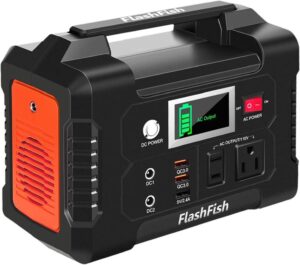

Often on sale around $90-$110 (sometimes dipping under $100 with coupons), the FlashFish 200W is another popular cheapie. It has a bit more capacity – around 151Wh (40800mAh at 3.7V). And as the name suggests, a 200W peak inverter (rated 150W continuous).
For under $100 (on sale), you get: – A slightly bigger battery = more run time than the 88Wh units. For instance, this could charge phones ~10+ times or run a 60W mini fridge for maybe 2 hours (not long, but in a pinch). – AC output at 150W means you can power a bit more – maybe a small laptop brick (~60W) and some headroom. – It’s got 2 AC outlets (though total combined 150W still). – 2 DC barrel outputs and a car port, plus 3 USB-A ports for your gadgets.
Why it stands out: That extra capacity and wattage for just under $100 (when discounted) gives you more versatility. Users have run things like wifi routers, small fans, and even recharged power tool batteries with it. It’s like a small brick-sized backup that covers many emergency basics. It even could run a TV (LED TV ~50W) for a couple hours if you wanted to watch something during a blackout, for example.
Portability: Weighs about 4.5 pounds, still very manageable.
Limitations: Still not for anything high drain. Don’t try a coffee maker or hairdryer (common mistake – those are 1000W+). Also, it uses a modified sine wave inverter (common in cheap units) – that’s generally okay for simple electronics, but some sensitive devices or motors might not like it. But at this price, pure sine is rare. (If you need pure sine under $100, not likely; you’d step up to slightly more expensive).
3. BLUETTI AC2A (204Wh) – If on sale around $99 (Honorable Mention)
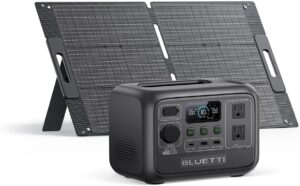

This is a new one – the BLUETTI AC2A has 204Wh capacity and a 300W pure sine wave inverter. Now, normally, that’s above $100 (MSRP ~$169), but BLUETTI did some promotions around $99 for first buyers and such. If you ever catch it at that price, it’s a steal because: – You get LiFePO4 batteries (long life, ~3500 cycles – unheard of in sub $100 range typically). – 300W output – that’s double the others here, meaning you could run more stuff, even low-wattage appliances or multiple devices. – 204Wh gives you decent capacity for small outings or multi-day phone charging.
The AC2A is basically the successor to Bluetti’s earlier small unit EB3A (which is 268Wh but ~$239). AC2A at $99 is more aspirational pricing, but keep an eye during sales. It shows how rapidly tech is improving that such specs might slide into sub-$100 within a year or so.
If not AC2A, another in similar emerging category is the Anker 521 PowerHouse – 256Wh, LiFePO4, 200W output. It’s usually ~$199, but if it ever dipped close to $100 (probably not that low yet), that’d be noteworthy. So I won’t list it as a main pick since it busts the budget, but watch the market.
For now, let’s stick to those proven under-$100ish:
4. Marbero 167Wh Portable Power Station
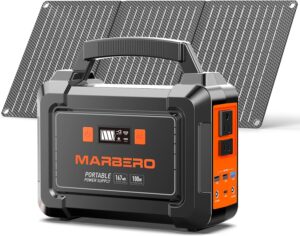

The Marbero 167Wh unit often sells around $99. It offers a mid-ground: 167Wh battery, 100W AC output (peak maybe 150W). It’s basically similar in class to the HOWEASY 88Wh but with double the capacity, and still only moderate inverter. – It has 2 AC outlets (but shared 100W limit). – USB outputs and a DC car port. – One thing Marbero often touts is using it for CPAP backup. Now, a CPAP might draw 30-60W on average, so on 167Wh you could get maybe 3-5 hours (maybe a full night if the CPAP is lower wattage or you turn off humidifier). It’s a stretch for that but at least possible if someone needed a very budget emergency CPAP solution (though one would prefer a larger one with more capacity or direct DC adapter ideally).
For charging devices and powering small stuff, it’s solid. Also weighs around 4 lbs, size of a small lunchbox.
Notable: The Marbero has pass-through charging, meaning you can charge it while it’s powering devices. Some use case: have it wall-plugged acting like a mini UPS for a router or medical device. But 100W limit is low for UPS usage beyond tiny loads.
Other honorable mentions:
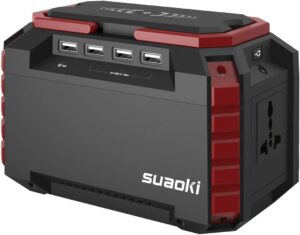

There are several rebranded similar units: Rockpals 80W (similar to 88Wh one), SUAOKI 150Wh, Aimtom 100Wh – all in that under-$100 zone especially with discounts.
One interesting one is the SINKeU 146Wh power bank – it’s essentially a big laptop power bank with an AC outlet (often ~$99). It’s like a brick with a single AC port (100W max) and USB. Good for laptop users needing something plane-friendly (it’s under 100Wh usually so you can take on airplanes). It’s slim, more like a chunky laptop charger shape than a lunchbox shape.
Wrapping Up the List:
These budget power stations can be thought of as high-capacity power banks with a bit of AC capability. They’re best for: – Short camping trips where you just need to charge gadgets and maybe run fairy lights or a small fan. – Emergency kits for keeping phones charged and radios running during a storm. – Topping up drone or camera batteries in the field. – Kids’ backyard camping nights, to plug a string light and charge their speaker, etc., without worrying about them draining a car battery or using candles.
They are not for: – Running power tools (nope, a 100W drill doesn’t exist generally). – Keeping appliances (except very small ones) going. – Anything over a couple hundred watts or more than maybe 0.2 kWh of energy usage.
One more stat perspective: 88Wh is about the energy in 8 AA batteries (approx 1.5Wh each) – though delivered more usefully. So these are indeed limited, but within limits, very useful.
Given their price, you could even buy two different ones if you catch sales – stash one in car, one at home. Since they are small, some people get a couple to distribute in emergency bags.
Always check for deals – prices fluctuate. Sometimes a slightly higher capacity model goes on sale and creeps just near $100. For example, occasionally you might find a Jackery Explorer 160 (167Wh) refurbished around $100 – that gives you a reliable brand albeit still similar capacity.
Finally, keep expectations realistic: these won’t last days unless you’re just charging phones. But as long as you know that, a sub-$100 power station can be a great value piece of gear to have around.