

Living in a van means balancing your wanderlust with practical needs – chief among them, electricity. One common question is: How big of a battery do I need for van life? To figure that out, start by understanding your energy consumption. For example, a typical 12V compressor fridge (a must-have for keeping food fresh on the road) uses about 30 to 55 amp-hours per day on average. If you run LED lights, charge phones, use a laptop, and maybe power a fan, your daily usage might total anywhere from 20Ah (minimalist) to 100Ah or more. Once you have an estimate, you can choose a portable power station (essentially a battery with outlets) with sufficient watt-hour (Wh) capacity to meet those needs.
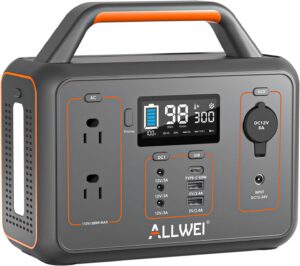

Converting Needs to Capacity: Amp-hours (Ah) can be converted to watt-hours by multiplying by 12 (since van systems are often 12V). So that fridge drawing 50Ah in a day is about 600Wh. If you also use 200Wh for gadgets and lights, that’s ~800Wh daily. In this case, a power station with at least 1000Wh (1 kWh) capacity would comfortably cover one day’s use without recharging. Keep in mind, you generally don’t want to fully drain a battery every time, so having a bit of extra capacity (say 20-30% headroom) is wise for battery longevity and cloudy days.
Battery Types (Li-ion vs LiFePO4): Most portable power stations use lithium-ion batteries. Premium models use Lithium Iron Phosphate (LiFePO4) which last for more charge cycles. For example, LiFePO4 units might endure 2500-3500 cycles before dropping to 80% capacity, whereas typical Li-ion might last 500-800 cycles. If you’re a full-timer using the battery daily, LiFePO4 is worth considering for its long life.
Charging on the Move: Also consider how you’ll recharge. If you drive daily, you can get by with a smaller battery because the alternator (car engine) can top it up. But if you park for days, you’ll need either solar panels or a larger capacity. A single 100W solar panel can provide roughly 30-36Ah per day of charge in good sun (that’s ~360-430Wh). Two or three panels can refill a 1000Wh station on a sunny day. So, your charging infrastructure (solar wattage, alternator charging capability) directly influences how big a battery you need – more charging means you can get by with less storage, and vice versa.
Modularity vs All-in-One: Some van dwellers build DIY battery systems with separate components (battery, inverter, charge controller). Portable power stations combine these in one unit, which is convenient and plug-and-play. When choosing, ensure the station has enough inverter output for your biggest device (e.g., a 700W blender needs a power station >700W output). Also, check the 12V output is regulated (holds a steady 12-13V) if you plan to run a fridge – many good power stations have this feature now.
Sizing Examples:
- Weekend Camper: Uses lights, phone chargers, maybe a small cooler. Daily need ~200Wh. A 300Wh (around 25Ah @12V) power station would suffice.
- Digital Nomad Vanlifer: Uses a fridge (500Wh/day), laptop and router (200Wh), lights/others (100Wh). Daily ~800Wh. A ~1000Wh battery is a comfortable minimum here, coupled with solar recharging.
- Family Van or Power User: Might have an electric cooktop (which could draw a lot in short bursts), multiple laptops, tablets, fan, etc. Daily usage could hit 1500Wh (125Ah). Solutions include one big 2000Wh station or multiple smaller ones designated for different tasks (cooking vs. devices).
Remember, you can start with a certain capacity and expand as needed. Some brands offer expansion batteries that plug into the power station, or you can add another unit. It’s often better to err on the side of a bit more capacity – running out of power in the middle of a workday or a hot night (when the fridge is needed) can be frustrating.
In summary, calculate your daily Ah or Wh needs, choose a quality power station slightly above that, and plan for how you will recharge it (solar panels, alternator, or occasional grid stops). With the right setup, you’ll have a reliable “electrical co-pilot” allowing you to live comfortably and freely on the open road.