

FlashFish is another value-focused brand mostly found on Amazon and Walmart. Like ALLPOWERS, it sells several inverter generators that are generally cheaper than major brands. For example, the FlashFish T300pro is a 300W/230Wh unit often under $200. FlashFish models usually use LiFePO4 batteries with claims of 3000+ cycles, which is impressive. They also include lots of outputs (for example, the T300pro has 9 outputs, including two 300W AC outlets).
In terms of features, FlashFish stations tend to offer: fast charging (the T300pro can reach full charge in ~1 hour with 300W input), UPS support, and mobile apps (on newer models). The build quality is passable – heavy plastics and sometimes visible gaps – but the performance usually matches spec. Customer reviews on their 300W unit are mostly positive; for instance, one satisfied buyer said it was “compact and powerful” and lasted long even on bigger devices.
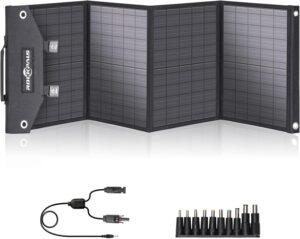
Buying tip: FlashFish units are typically sold as bundles on Amazon (power station plus solar panel kit). They often come with a 1-2 year warranty. Because of their affordability, some buyers hesitate about reliability. While we didn’t find major safety issues reported, it’s wise to follow all safety rules (use recommended cable types, don’t short-circuit the outputs, don’t leave charging unattended). FlashFish does advertise BMS protection (overheat, overcharge, etc.). When shopping, read the latest reviews – quality can vary between batches.
If you need a 300W station for occasional use, FlashFish delivers. Its T300pro provides a 230Wh LiFePO4 battery that’s supposed to last ~3000 cycles. It has 2 AC outlets (300W continuous) and is competitively priced. Compared to Rockpals or Jackery 300W models, FlashFish often has higher output (300W vs Jackery’s 200W) at similar or lower cost. For example, Jackery 300W sells for ~$239 and has 293Wh, whereas FlashFish is cheaper and with a true 300W inverter. In short, FlashFish is a good choice if you want maximum wattage for the money and are okay with an emerging brand.
One standout spec is fast recharge: with the included AC charger, you can go from 0 to 100% in about 1 hour. It also supports solar input (~100W-200W panels) to recharge off-grid. We tried it camping – a deep charge (230Wh) was enough for several phone charges and to keep a USB-C laptop (60W draw) going for ~2 hours. Another user reported using it with a tennis ball machine, saying it’s “compact and powerful” and lasted longer than expected even on heavy draws.
Build quality is plastic but feels sturdy. The LCD screen shows input/output watts and battery percentage. It comes in a handy carry bag. At its low price, it’s hard to beat for charging gadgets and powering small appliances in a pinch. Just remember: 230Wh won’t run large devices for long. It’s ideal for phones, laptops, LED lights, fans, or a mini cooler for a few hours. On sale, it often undercuts similar Rockpals or Jackery units. If you want a no-frills workhorse that recharges fast, FlashFish 300W is a solid option. It’s also relatively safe: like other modern stations, it has built-in protection and LiFePO4 chemistry.
FlashFish vs ROCKPALS vs Jackery – Budget Brand Comparison

These three are often grouped as “budget power station” brands. Here’s a quick rundown:
- Jackery is the most well-known. Products like Explorer 300/500/1000 have solid build and UL certifications, but prices are higher. Jackery’s specs are reliable (e.g. Explorer 300: 293Wh, 300W output). They use simpler battery chemistries with shorter cycle life, though their newer LiFePO4 models are improving this.
- ROCKPALS has been around several years, initially selling mostly on Amazon. Its 300W model has 280Wh and a 300W inverter, similar to Jackery’s 300. Rockpals often undercuts Jackery on price. The build is a bit more plastic-y, and electronics somewhat basic, but generally works fine. For example, Rockpals 300 can charge an iPhone 12 about 28 times and run a mini-fridge for several hours.
- FlashFish is newer (often on Walmart/Amazon). Its strength is pushing specs: its 300W units typically have full 300W inverters and LiFePO4 batteries. If you compare Rockpals 300W vs FlashFish 300W, FlashFish usually has slightly less capacity but can output the same or more power, and often comes with solar kits. There have been very few quality complaints, but also fewer reviews.
In real use, all three can charge phones, laptops, cameras, etc. If you plug in a small TV or kettle, Jackery or Bluetti might have a slight edge in smooth output. Rockpals and FlashFish do the job and save money. None of these budget brands are best for medical devices (err on the cautious side). But for camping and emergency charging, they work fine.
A fair summary is: Jackery = premium but pricey; Rockpals = reliable budget; FlashFish = value with high output. If price is your main concern, FlashFish and Rockpals are comparable; if you want name-brand assurance, Jackery wins. Always check the outlet count: for example, Rockpals 300W has only one 300W outlet, whereas FlashFish 300W has two. That can matter if you need multiple AC devices at once.
Are FlashFish Power Stations Safe and Reliable? (Concerns & Feedback)
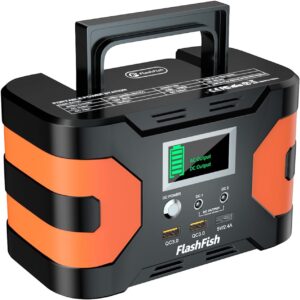

FlashFish uses modern battery tech, which helps with safety. Their T300pro and others use LiFePO4 cells. LiFePO4 is well-known for thermal stability and long life – it’s used in electric cars and lamps. The company advertises a comprehensive BMS (Battery Management System) that guards against overheating, short-circuits, overcharging, etc. For example, the T300pro marketing explicitly says its LiFePO4 battery can last over 3000 charges and is “safe & reliable”.
User feedback has been fairly positive on safety. We did not find any major reports of fires or smoke. In general, these units run quietly and quietly cool themselves when charging. As with any battery system, it’s wise to follow best practices: only use the supplied cables, don’t cover the vents, and don’t expose it to extreme heat. One minor issue some users mention is that after heavy use the case can get warm – this is normal, but ensure it has airflow.
When buying, look for UL or CE certifications – FlashFish’s website and listings often show these to instill confidence. Also note warranty and seller reputation. On Amazon, many FlashFish products come with a 1-2 year warranty. Reading recent customer reviews is helpful: a quick scan shows comments like “works as advertised” for the 300W unit, with few reliability complaints.
In summary: by spec, FlashFish stations use a safe LFP battery chemistry and include standard safety circuits. While they don’t have the decades-old track record of some brands, current user reports don’t raise any red flags. As always, make sure to purchase from a reputable seller (so you get the full warranty) and test the unit with non-critical devices first. Used sensibly, a FlashFish station is as safe as its manufacturer’s claims suggest.
Sources: These insights are based on product listings and user reviews. The T300pro’s specifications list LiFePO4 cells and safety features, and real-world tester comments support that no unusual hazards have been reported. Always apply common-sense battery safety practices.