

“The midsummer sun was relentless. The power went out, and the silence of the stopped AC was deafening. Would a portable power station save the day?” This scenario is exactly why many people are investing in high-capacity portable power stations that can run an air conditioner when the grid fails. It’s not a simple task – an air conditioner can consume anywhere from 500 up to 4,000 watts depending on size and BTU rating Even a small 5,000 BTU window AC draws around 1,465W of power and can demand up to 3× that wattage at startup as the compressor kicks in. So, if you want backup cooling, you need a power station with serious muscle. The good news? There are now “solar generators” and battery power packs that can handle these heavy loads. In this article, we’ll walk through some of the best portable power stations capable of running an air conditioner, their key features, and what makes them stand out. We’ll look at massive units that could keep a room cool for a few hours, as well as more portable options for spot cooling. Let’s find the right one to keep you chill when the grid goes down or when you’re off in the wild heat.
| Product Name | Image | Check Amazon Price and Reviews |
|---|---|---|
| EcoFlow Delta Pro | 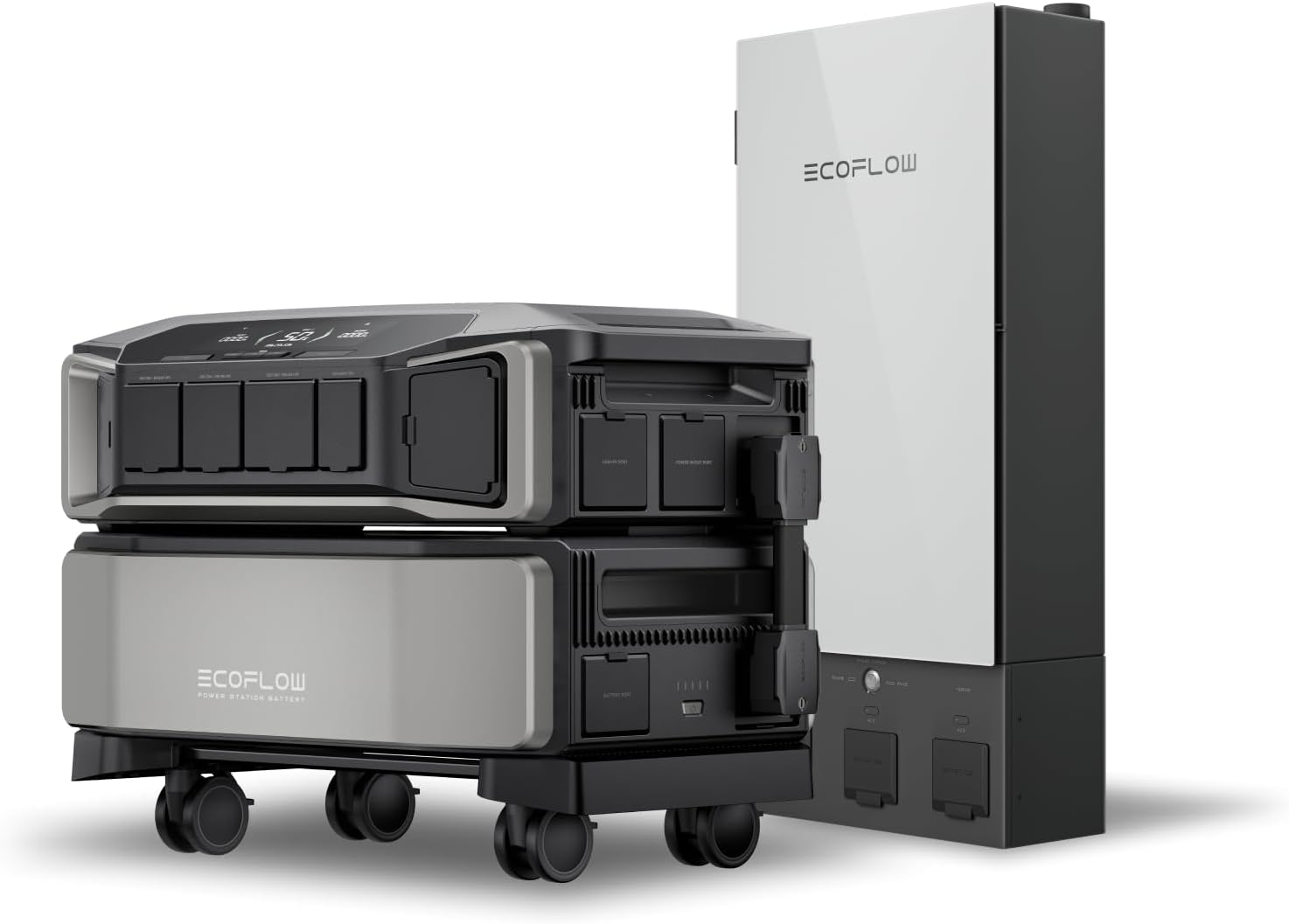 | |
| Jackery Explorer 3000 Pro | 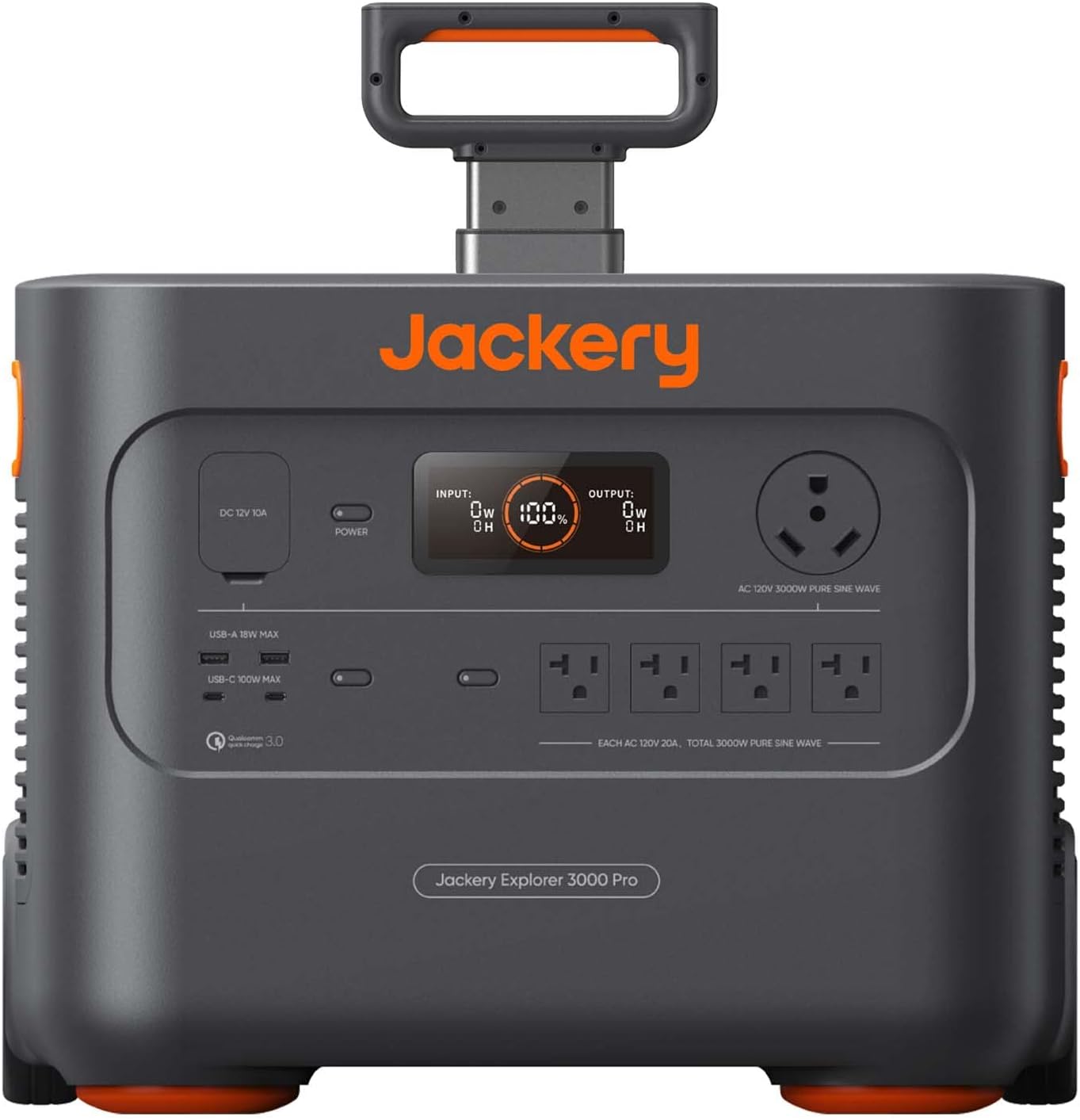 | |
| BLUETTI AC300 with B300 Expansion Battery | 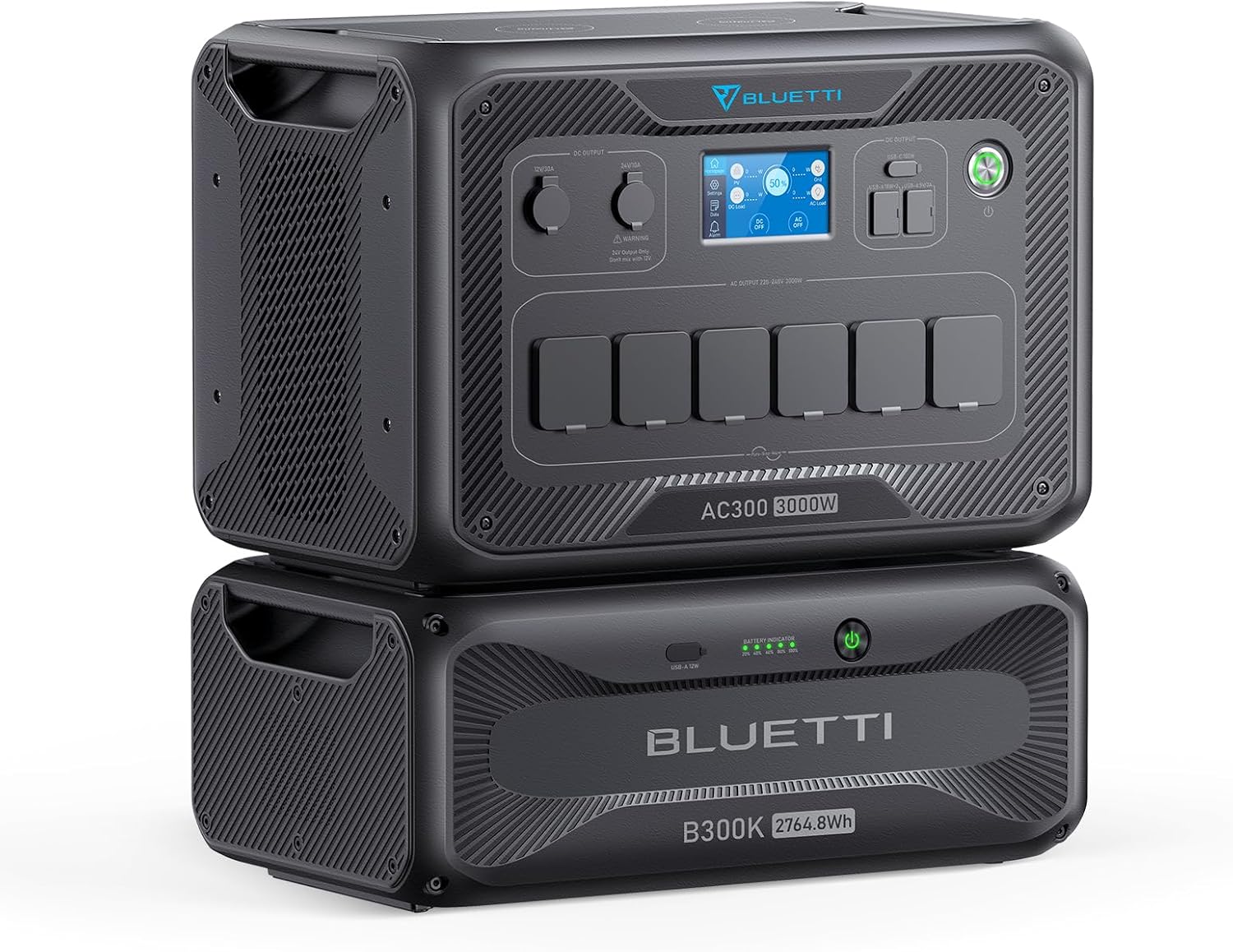 | |
| Goal Zero Yeti 3000X | 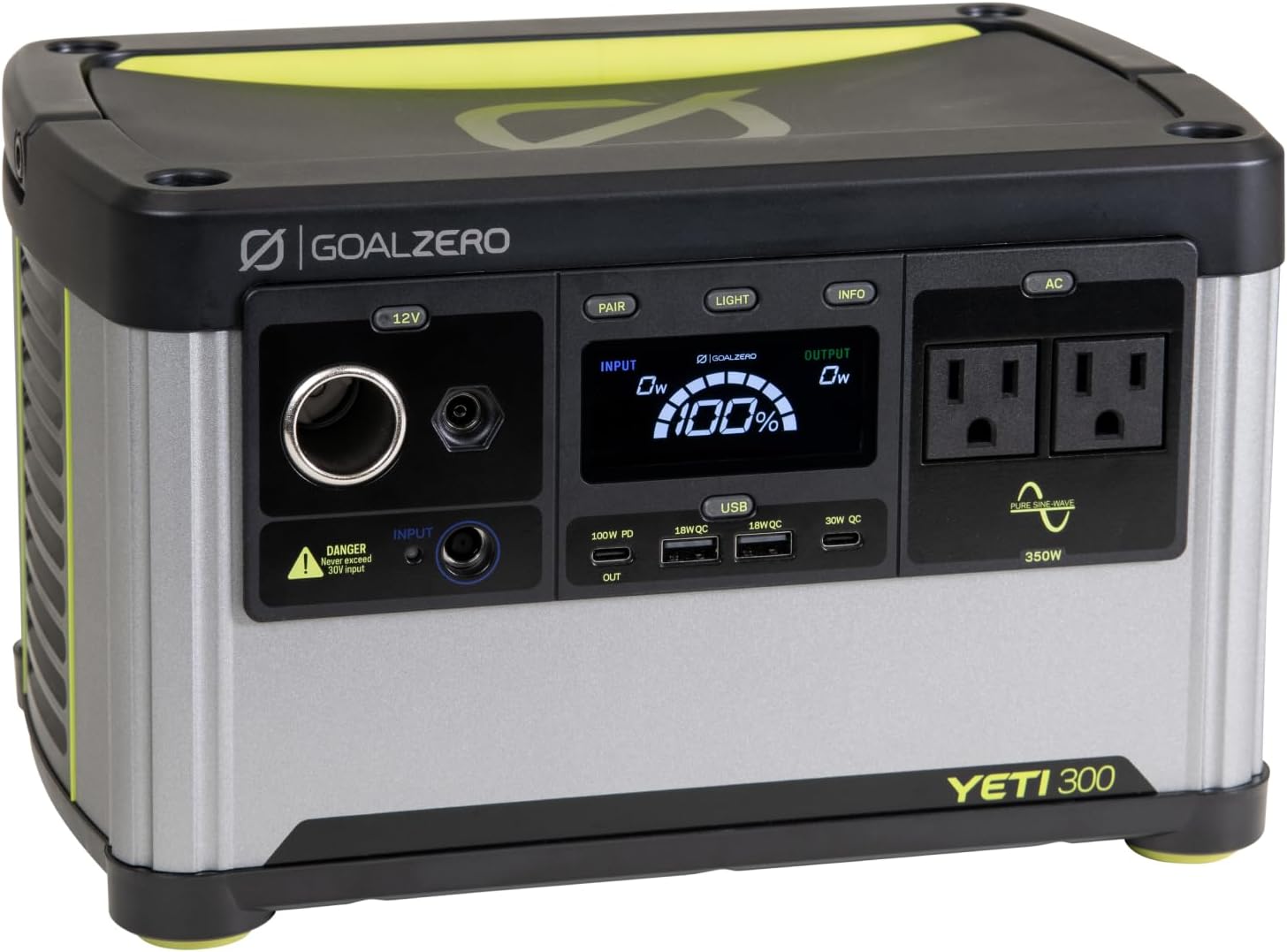 | |
| BLUETTI AC200MAX | 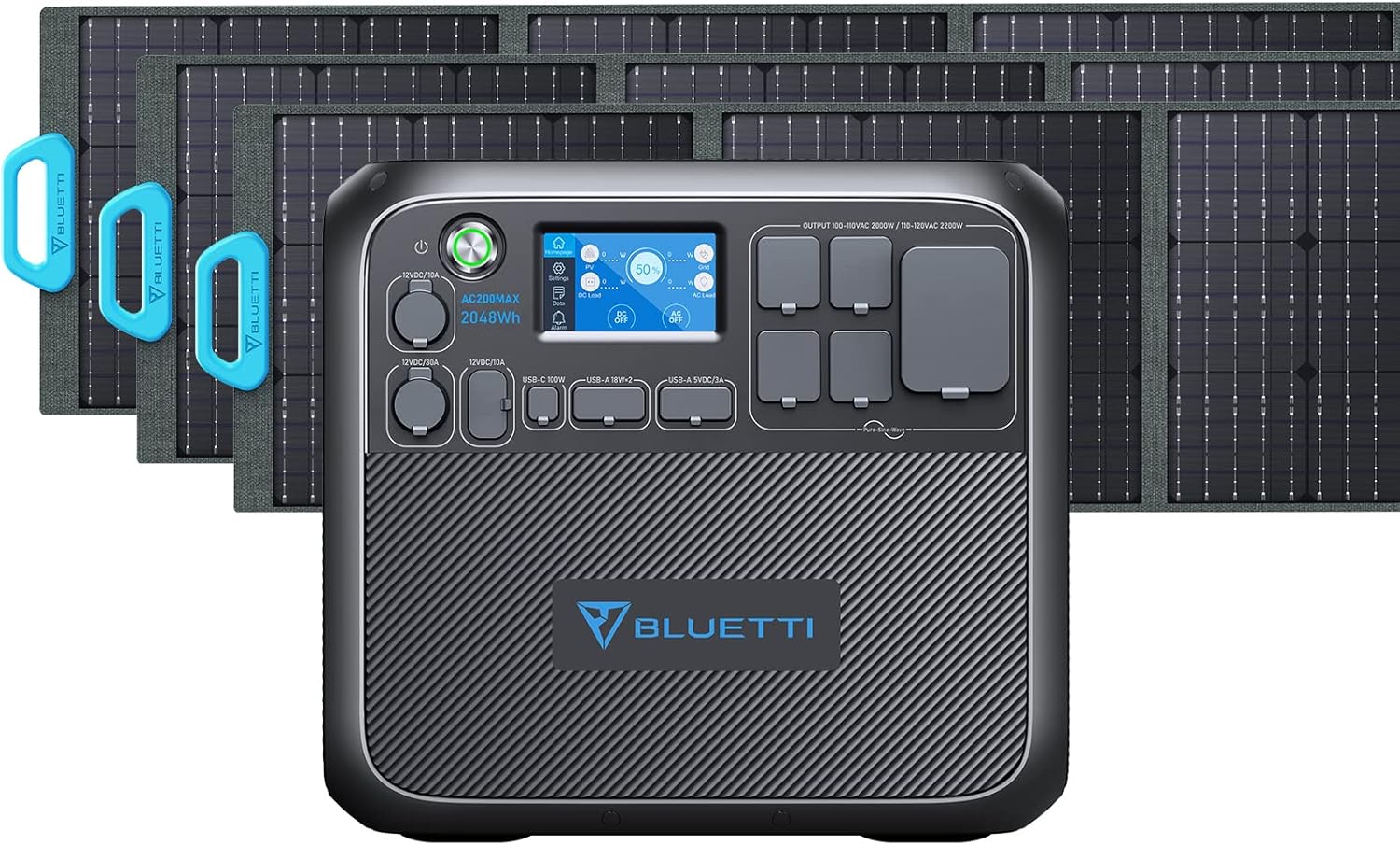 |
Contents
- 1 What to Look For in a Power Station for AC Units
- 2 EcoFlow Delta Pro – Ultimate Home Backup Power
- 3 Jackery Explorer 3000 Pro – Heavy-Duty with Solar Charging
- 4 BLUETTI AC300 with B300 Expansion Battery – Modular Giant for Off-Grid Living
- 5 Goal Zero Yeti 3000X – Proven Backup with App Control
- 6 BLUETTI AC200MAX – Compact Powerhouse for Mid-Sized AC Units
What to Look For in a Power Station for AC Units
Before jumping into the products, it’s worth noting what features matter when your goal is to power an air conditioner:
- High Inverter Output: Check the wattage the power station’s AC inverter can continuously supply. For AC units, you’ll typically want at least 1,500-2,000W continuous output, because even small ACs use a lot of power. Also look at the surge or peak output; remember that compressor-based appliances like ACs have a surge draw that can be double or triple their running wattage For example, if your window AC runs at 600W, it might need 1,800W just for a second to start up. Each power station below lists its continuous and peak (surge) output.
- Large Battery Capacity: Running an air conditioner will drain batteries fast. A larger battery (measured in watt-hours, Wh) means more runtime. A power station with ~500Wh might only run a small AC for less than an hour, whereas one with 3000Wh or more could give you a few hours of cooling. If you’re trying to sleep through a hot night without power, aim for the biggest battery you can manage or afford.
- Pure Sine Wave AC Output: All of the quality stations here provide a pure sine wave AC, which is important for sensitive electronics and to ensure the AC’s motor runs smoothly. Cheap inverters might output modified sine wave, which can cause appliances to run less efficiently or even get damaged.
- Portability vs Capacity: These units are generally heavy – often 60 to 100+ lbs – but still “portable” in the sense that they have handles or wheels. If you need to move it around frequently (say, between home and RV), pay attention to weight and form factor. Some big ones include wheels like a suitcase.
- Recharging Options: If you’re off-grid, solar charging input can be crucial. Many big power stations support several hundred watts of solar input to recharge during the day. Fast AC charging is nice for convenience too – some can recharge in a couple hours from the wall.
- Battery Type & Lifespan: Newer models use LiFePO4 (LFP) batteries which last for 2,000+ cycles and hold up better over years. Others use NMC lithium which might only get 500 cycles. If you plan heavy use, the battery chemistry could be important.
With those factors in mind, let’s dive into the top picks.
EcoFlow Delta Pro – Ultimate Home Backup Power

Key features:
- Massive 3600Wh Capacity: Provides a huge energy reserve for running AC units and other appliances for hours.
- High 3600W Output (7200W Surge): Capable of handling large AC startup surges and running multiple devices simultaneously.
- LiFePO4 Battery: Long-life battery (rated 6500+ cycles to 50% capacity) for years of heavy use; safe and stable chemistry.
- Expandable and Smart Home Ready: Can link extra battery units to expand capacity up to 25kWh, and even integrate with home circuits via an EcoFlow Smart Panel.
- Multiple Charging Methods: AC fast charge, solar (extensive solar support), 12V car, and even an EV charger input – very versatile for recharging off-grid or on the go
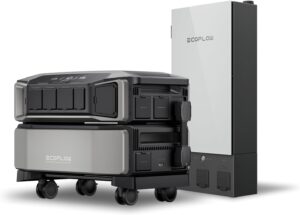
The EcoFlow Delta Pro is often hailed as one of the most powerful “portable” power stations on the market, and for good reason. It boasts a massive 3,600Wh LiFePO4 battery and a pure sine wave inverter that can output 3,600W continuously (up to 7,200W surge). That means it can easily run a mid-sized air conditioner – even a 10,000 BTU portable AC unit (~1,000W) is well within its capabilities, with headroom for startup surges. Users have run heavy appliances like refrigerators, power tools, and yes, air conditioners on the Delta Pro without tripping it. With this capacity, you’re looking at a couple hours of runtime for a 5,000-8,000 BTU AC, or more if you cycle it.
Despite its big battery, the Delta Pro is designed to be mobile: it has a built-in telescoping handle and wheels, so you can roll it like luggage. Weighing in around 99 lbs, you won’t be lifting it often, but the wheels make garage-to-house moves manageable. It also shines in recharging flexibility – it can take input from solar panels (up to 1600W solar input), AC wall outlet, car charger, or even charge at EV stations with an adapter. In fact, EcoFlow says with fast charging it can juice up from 0 to 100% in about 2.7 hours from a 240V outlet. That’s great for getting it ready before a storm hits.
Jackery Explorer 3000 Pro – Heavy-Duty with Solar Charging

Key features:
- 3024Wh Battery, 3000W Output: Big capacity and output allow it to run large appliances like refrigerators, microwaves, or an AC unit for a few hours.
- 6,000W Surge Handling: High surge capacity means it can start motor-driven devices (like AC compressors) without breaking a sweat.
- Fast Charging: AC recharge ~2.5 hours to full, and excellent solar charging support (up to six 200W panels) for off-grid use.
- Mobile Design: Built-in trolley wheels and extension handle make repositioning this 60+ lb beast much easier – great for RV users or moving between rooms.
- Multiple Outputs & App Control: Four AC outlets (including one 30A port for RVs), USB-C PD 100W ports for laptops, and a smartphone app to monitor and control the unit remotely.
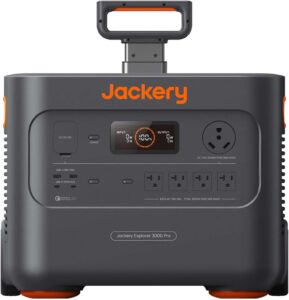
Jackery’s new flagship, the Explorer 3000 Pro, is built to tackle high-demand appliances during outdoor adventures or home outages. It carries a 3,024Wh battery and a robust inverter that supplies 3,000W continuous (with 6,000W peak). In real terms, Jackery advertises that this power station can run a typical window AC for about 2-3 hours on a full charge. That’s a big deal if you’re trying to sleep through a muggy night after a storm knocks power out – a couple hours of cool air can be a lifesaver. With four AC outlets (and even a 25A RV-style plug), the Explorer 3000 Pro is ready for both home and RV duty.
Jackery has focused on making this huge unit relatively portable: it weighs ~63 lbs but smartly includes sturdy wheels and a fold-out handle, so moving it is like pulling a carry-on suitcase. It’s also built tough for outdoor use – Jackery claims it operates quietly (around 30dB) and can function even in sub-freezing temperatures thanks to an integrated battery heater. When it comes to charging, the 3000 Pro impresses: plug it into the wall and it can charge fully in 2.5 hours, which is very fast for such a large battery. It also supports up to 1400W of solar input, letting you recharge in as little as 3-4 hours of good sunlight with enough panels.
BLUETTI AC300 with B300 Expansion Battery – Modular Giant for Off-Grid Living

Key features:
- Modular 3-6kWh Battery System: Customize your capacity – use 3,072Wh per B300 battery, add extra batteries to extend runtime as needed.
- Inverter: 3000W Pure Sine (6000W Surge): High output designed to handle heavy loads like HVAC, well pumps, etc., making it suited for whole-room cooling or multiple appliances.
- Massive Solar Input (2400W): Ideal for off-grid – you can hook up a large solar array to recharge quickly (e.g., ~3kWh solar generation in just 1.5 hours of good sun).
- UPS Functionality: Acts as a home battery UPS – it can switch over 24/7 to provide uninterrupted power to appliances in an outage (important if you want your AC or sump pump to kick in automatically).
- Durable LFP Batteries: Uses LiFePO4 cells rated for 3,500+ cycles, meaning the system can last for years of daily use without significant capacity loss.
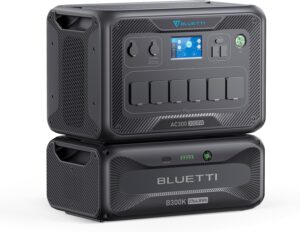
For those wanting a modular solution, BLUETTI’s AC300 system is a top contender. The AC300 is actually just the power station (inverter + controls) with no internal battery – you pair it with one or more B300 batteries, each about 3,072Wh. With one B300 pack attached, you’ve got roughly 3.1kWh of battery and the inverter offers 3,000W continuous output (surge 6,000W). Hook up a second B300 and you double the capacity to 6,144Wh. This flexibility is great if you need longer runtimes; you could start with one battery and add another later. In any case, 3,000W is plenty to drive a mid-size air conditioner and maybe some fans or a fridge alongside. BLUETTI’s pure sine wave inverter is reliable and precise, suitable for sensitive electronics too.
The AC300 is a beefy unit (around 47 lbs for the head, and each battery ~74 lbs), but since the battery is separate, you can unplug it and move components one at a time. It’s less “grab-and-go” and more semi-permanent, but many users incorporate this into cabins, off-grid homes, or as a standby emergency system. Notably, the AC300 can input a huge amount of solar – up to 2,400W of solar charging possible (it has dual MPPT controllers). It also supports dual AC charging or AC+solar combined for extremely fast recharge if you have the extra kit. With two B300 batteries and strong sun, you could actually keep an AC running almost continuously, charging by day and discharging by night.
Goal Zero Yeti 3000X – Proven Backup with App Control

Key features:
- 3032Wh Capacity, 2000W Output: Enough energy to run essentials for a short period; can power AC units under ~1500W and cycle on larger loads carefully.
- Sturdy Build and Brand Reputation: Goal Zero is known for robust, field-tested products – the Yeti 3000X is rugged and comes with a reliable pure sine inverter for safe operation of appliances.
- App & Smart Controls: Built-in WiFi lets you control and monitor the power station remotely via a smartphone app – great for home backup monitoring or optimizing usage.
- Versatile Ports: Comes with two 120V AC outlets, regulated 12V car port, 6mm 12V ports, USB-C PD 60W, and standard USB-A – a wide array to plug in everything from a fridge to phones simultaneously.
- Expandable Backup System: Can integrate with home circuits (with the Goal Zero transfer switch kit) and chain to additional battery modules (Goal Zero Tank expansion) for more capacity, making it a flexible part of a home emergency setup.
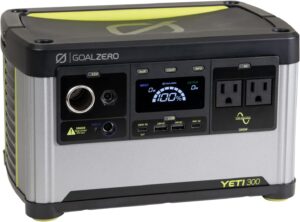
Goal Zero’s Yeti series is a long-time player in portable solar generators, and the Yeti 3000X is their high-capacity offering aimed at home backup and basecamp use. It provides a 3,032Wh lithium NMC battery and a 2000W pure sine inverter (3500W surge). While its continuous output (2kW) is a bit lower than some others on this list, it’s still sufficient for a smaller air conditioner (think ~8,000 BTU or less) as long as the startup surge doesn’t exceed 3500W. Users have reported running portable AC units in the 5000-8000 BTU range on the Yeti 3000X successfully, albeit with limited runtime. Expect roughly 1.5 to 2 hours for a ~500W AC load on this unit.
What sets the Yeti apart is the ecosystem and build quality. It’s a very solid unit with a metal enclosure, rubberized handles, and a well-thought-out interface. It also has WiFi connectivity – you can use the Goal Zero Yeti app to monitor input/output, turn ports on/off, and even set charging profiles from your phone. This is handy if you’ve got it plugged into solar and want to remotely check on things. The Yeti can be charged via wall outlet (~14 hours with the included charger – not the fastest), and supports solar charging up to 600W. It has an expansion module port too: Goal Zero sells accessories like the Home Integration Kit to wire it into circuits, or the Tank system that lets you add lead-acid batteries for more capacity.
BLUETTI AC200MAX – Compact Powerhouse for Mid-Sized AC Units

Key features:
- 2048Wh LFP Battery & 2200W Inverter: Great capacity in a relatively compact form; powers mid-sized AC units or multiple smaller devices with ease.
- Long-Life LiFePO4 Cells: Delivers about 10 years of daily use (3500+ cycles), offering much better long-term value and safety (more stable chemistry) than cheaper NMC-based stations.
- Expandable Design: Can connect extra battery modules (BLUETTI B230 or B300) to increase capacity if your needs grow – flexibility rarely seen in this class.
- Strong Solar Charging: Supports up to 900W solar input, allowing full recharge in ~3 hours of good sun (or you can AC charge ~500W from wall in ~5 hours, or combine both).
- Comprehensive Outputs: 4 AC outlets, one 30A RV-style AC outlet, multiple DC outputs including 12V car port, 12V/30A high amperage port, USB-C 100W, USB-A, plus wireless chargers on top – it’s prepared for almost any device or appliance.
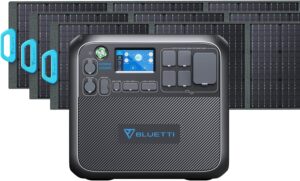
For a slightly more compact (and affordable) option that can still handle an air conditioner, BLUETTI’s AC200MAX is worth a look. This all-in-one unit packs a 2,048Wh LiFePO4 battery and can output 2,200W AC continuously (4,800W surge). In practice, that means it can run something like a 6,000 BTU portable AC (which might draw ~700W) for a couple of hours, or a smaller 5,000 BTU window unit (~500W) for closer to 3-4 hours, depending on usage cycles. It has no trouble with startup loads in that class due to the nearly 5kW surge overhead. And because it uses LFP battery cells, you can cycle it daily during summer without wearing it out quickly – it’s rated for 3,500+ cycles to 80% health.
The AC200MAX is popular for van life and RV folks running AC off solar, because it hits a sweet spot in size vs. performance. It weighs about 62 lbs – heavy, but still liftable and roughly “portable”. The top of the unit features dual wireless charging pads, convenient for phones. For recharging, you can feed up to 900W of solar input, and it also supports dual charging (solar + AC simultaneously) to top up faster. One neat aspect: it’s expandable. BLUETTI lets you attach their B230 or B300 expansion batteries if you later need more capacity (up to two batteries can be added). This gives some future-proofing; you could boost total capacity to ~8.2kWh with two B300 packs, putting it in whole-house backup territory.