

When the stakes are high and you need serious backup power, a 2000W portable power station steps up as the heavy hitter. Picture a sudden blackout at home: a 2000W “solar generator” can keep your refrigerator cold, lights on, phones charged, and even run power tools or a microwave – all without breaking a sweat. These units are beefier in every way (wattage, battery capacity, and yes, weight), essentially acting as quiet, fume-free generators. Extreme weather events are on the rise, and Americans are taking note – 66% are concerned about power outages during severe seasons. Having a 2000W portable power station is like having a dependable backup quarterback ready to take over when the grid goes down or when you’re off-grid needing lots of juice. In this section, we’ll review some of the best 2000W-class portable power stations, ideal for home backup, job sites, or anyone with high-power needs. We’ll weigh their capacities, features, and help you decide which heavy-duty unit might be your MVP.
| Product Name | Image | Check Amazon Price and Reviews |
|---|---|---|
| Jackery Explorer 2000 Pro | 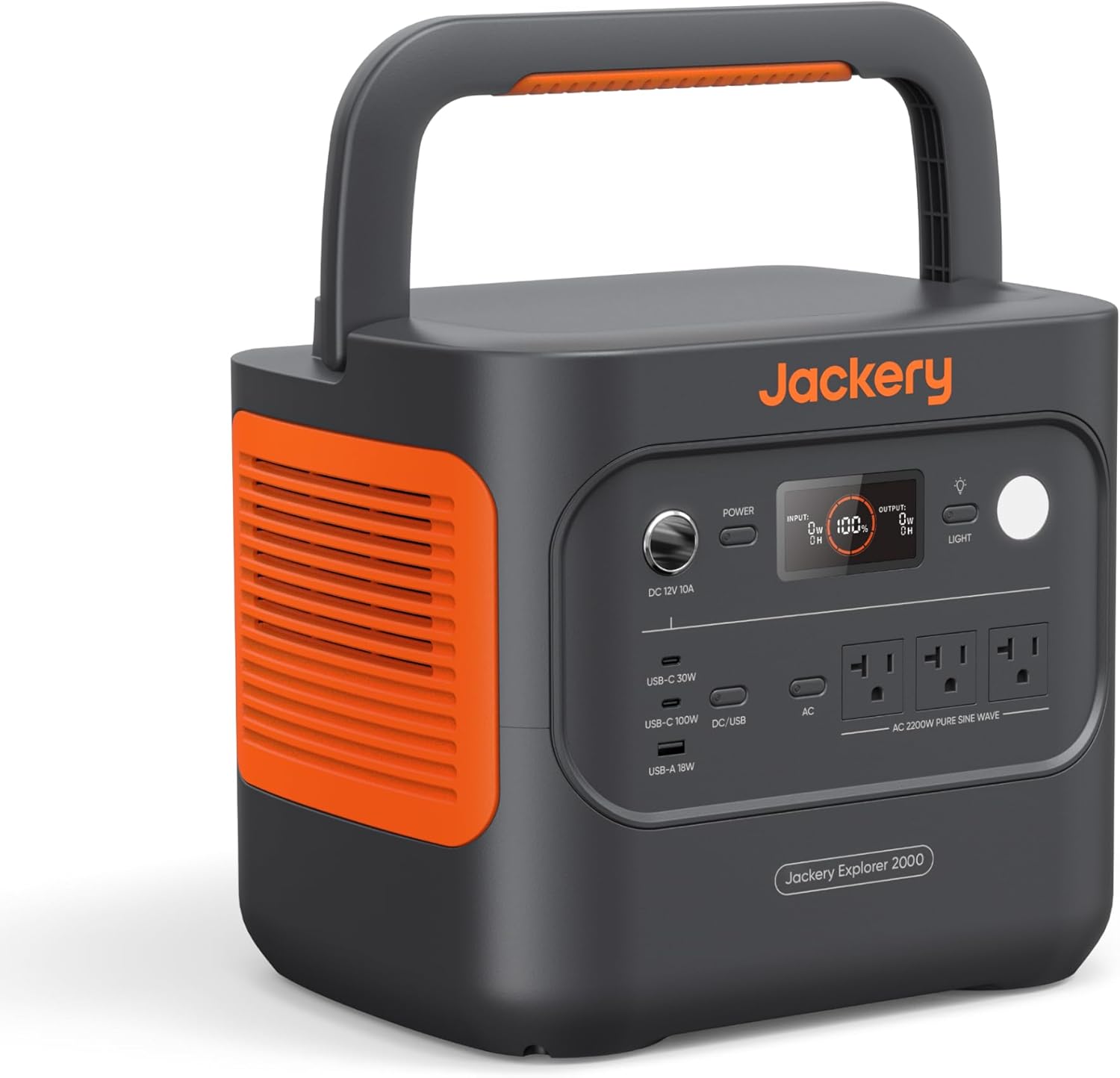 | |
| BLUETTI AC200P | 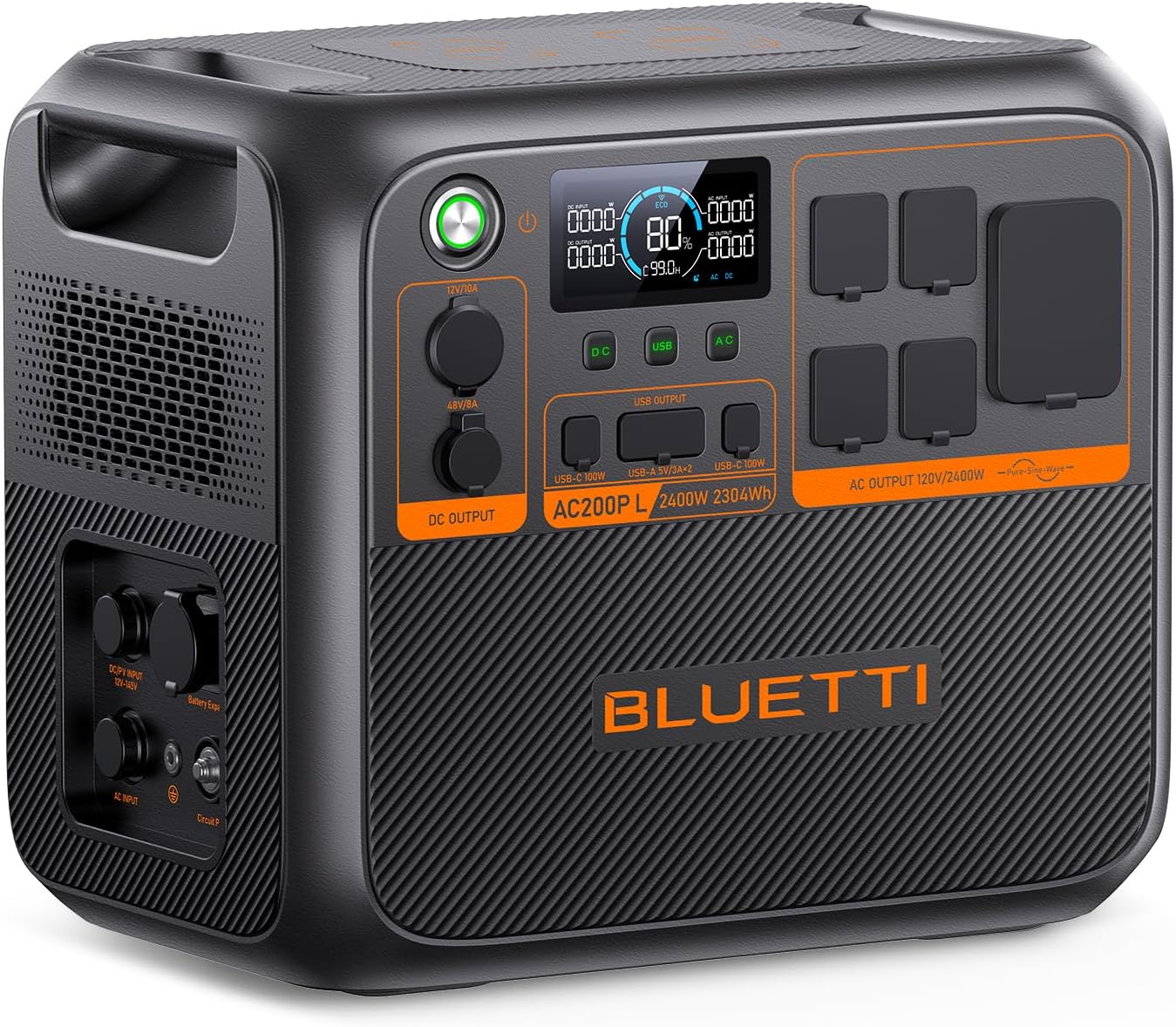 | |
| EcoFlow Delta Max 2000 | 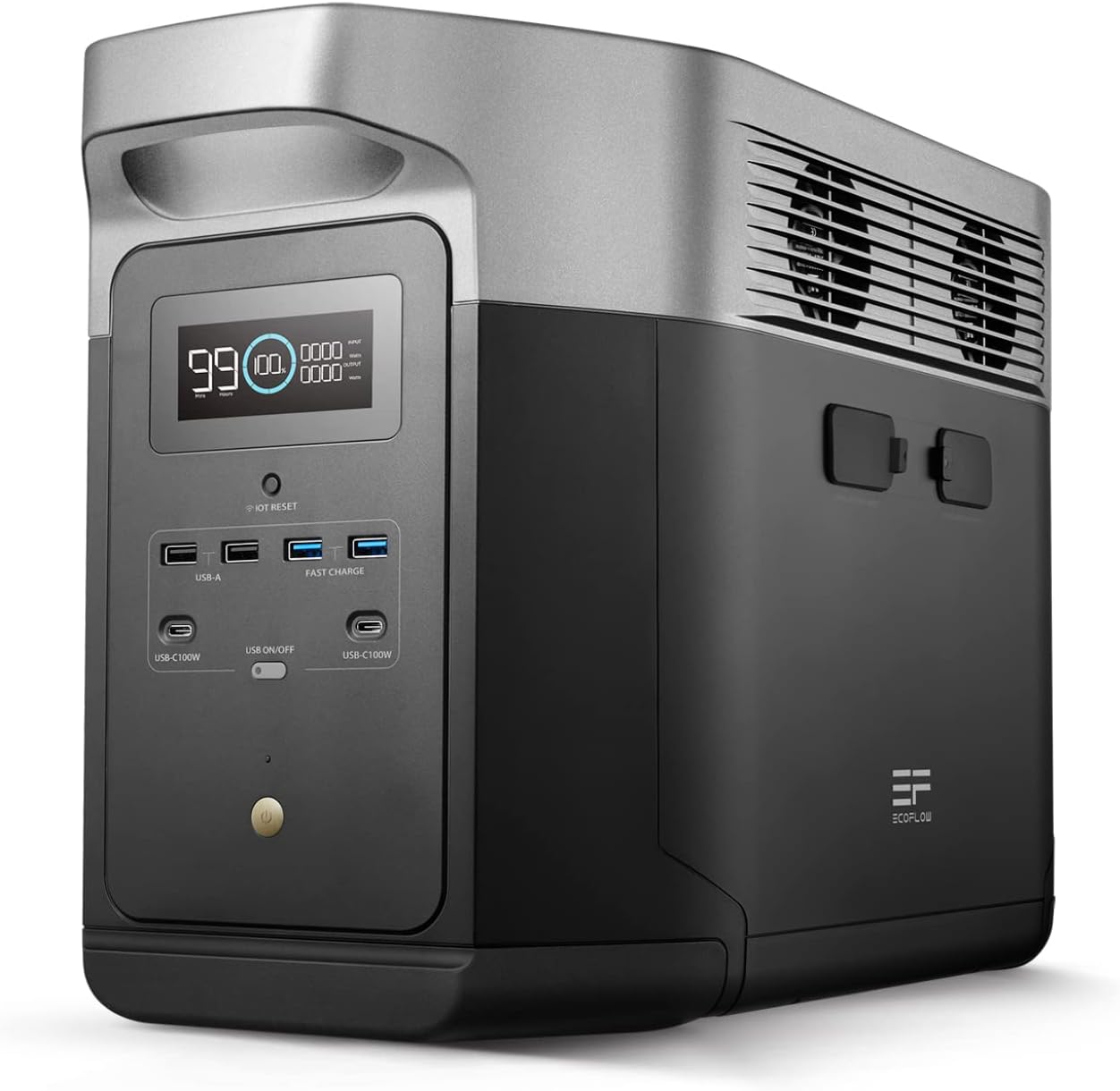 | |
| Geneverse HomePower Two Pro | 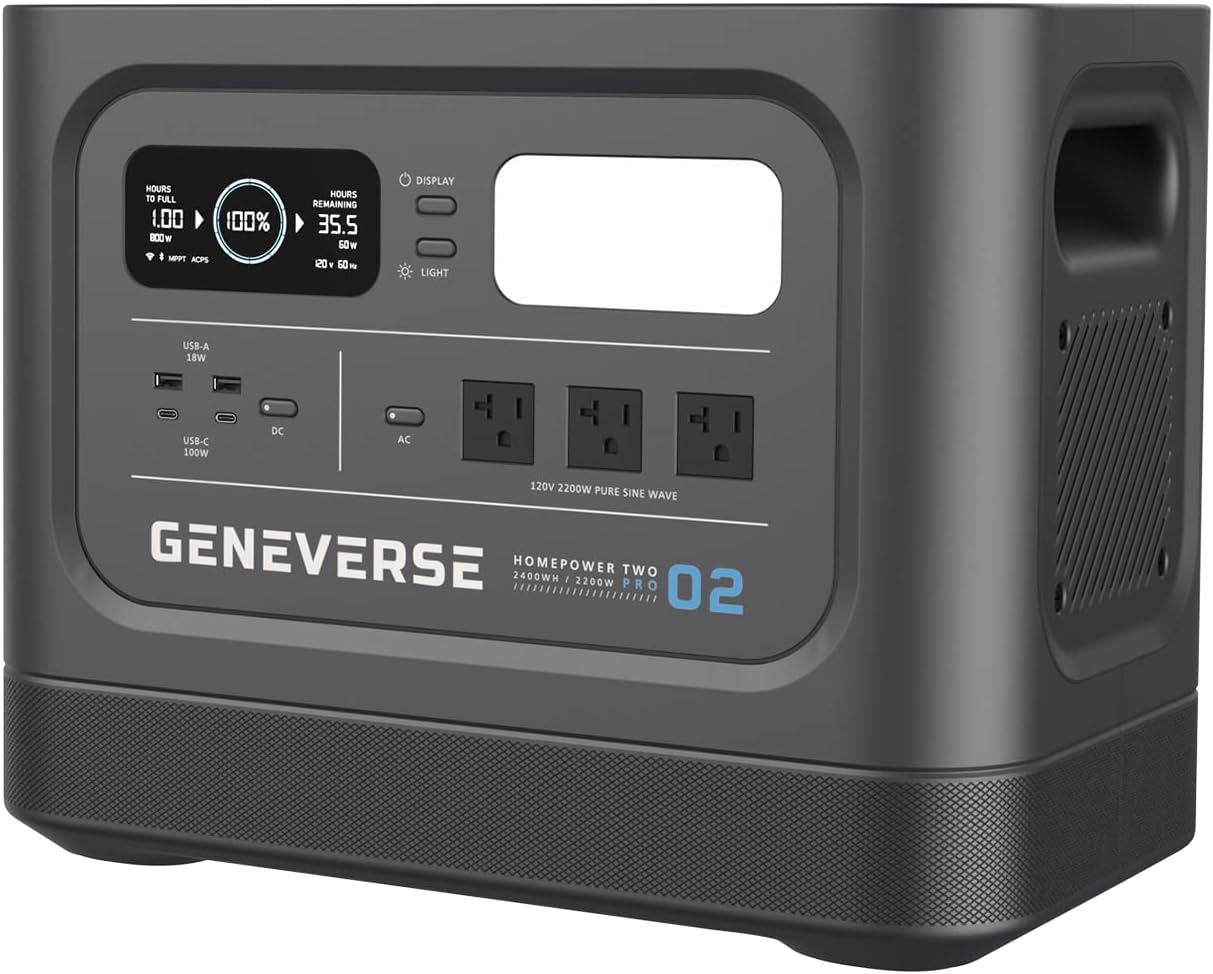 | |
| Anker 767 PowerHouse (SOLIX F2000) | 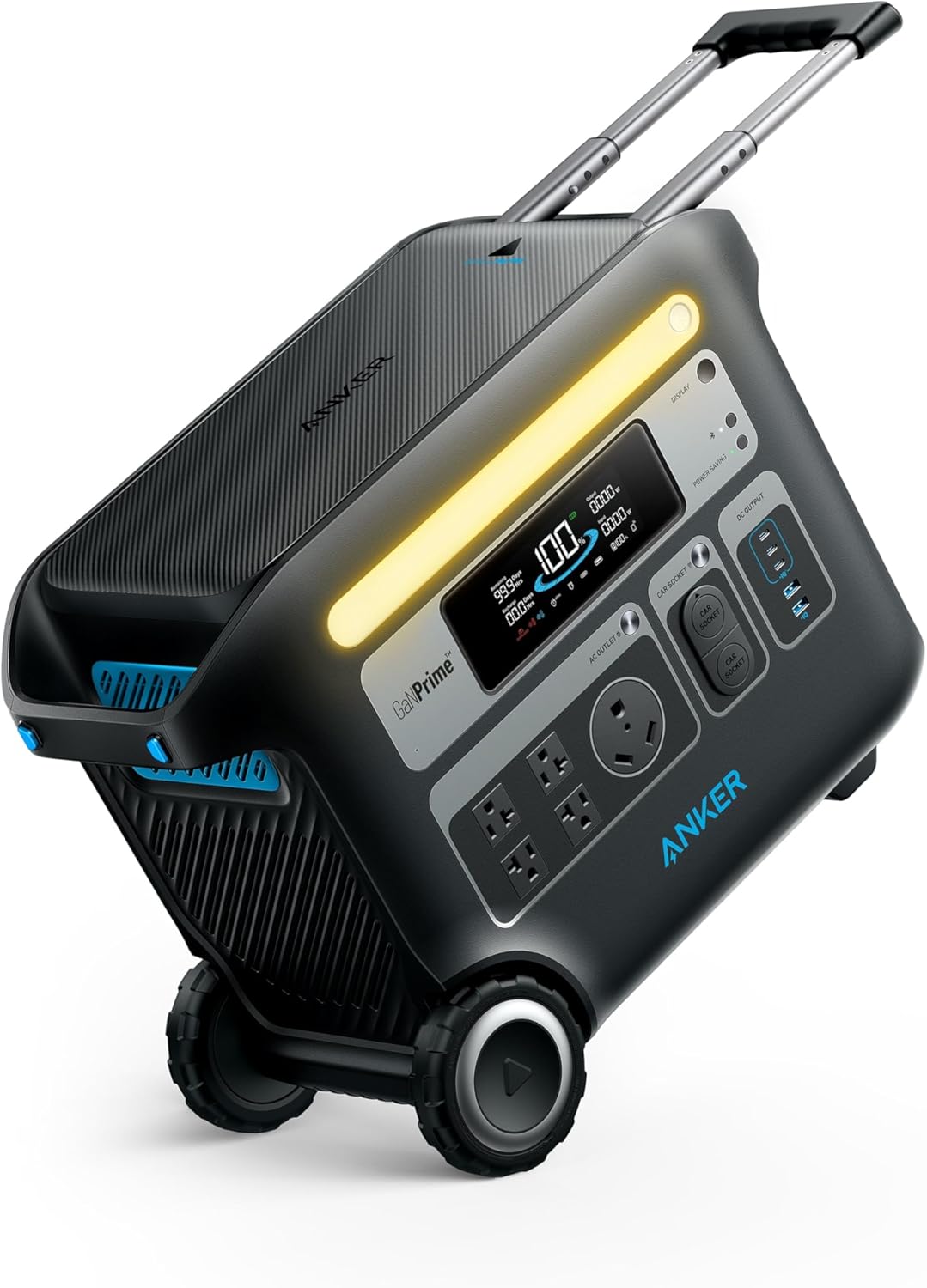 |
Contents
Jackery Explorer 2000 Pro

Key specs:
– Capacity: 2160Wh (Li-ion NMC battery, rated ~800 cycles to 80%).
– Output: 2200W AC continuous (peak 4400W) – handles heavy appliances like microwaves, coffee makers, most power tools, etc.
– Weight & Size: ~43 lbs, with dimensions roughly 15×10.5×12 inches. Compact for its class, easy to fit in a car trunk or corner of a room.
– Charging: ~2 hours via AC (dual charging system), or ~2.5 hours via 6× SolarSaga 200W panels (in ideal sun). Also supports car charging (slower).
– Notable Features: Very quiet operation (fans only when needed). Has an UPS mode (though transfer time ~20ms). Durable build with rubber carrying handle. Jackery’s Battery Management System provides over-voltage, over-heat protection, etc.
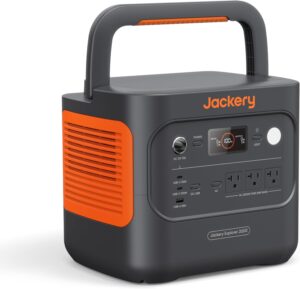
Jackery’s big flagship, the Explorer 2000 Pro, is a 2,200W output (4400W surge) power station with about 2160Wh of Li-ion battery capacity. It’s the big brother of the Jackery 1000, and it means business. Despite the beefy stats, the 2000 Pro maintains Jackery’s signature portability – it weighs around 43 lbs (19.5 kg), which is notably light for this category (Jackery touts it as one of the lightest 2kWh stations). It has a built-in handle (no wheels, but at that weight one person can lug it short distances). The Explorer 2000 Pro is perfect for home emergencies – it can easily run large appliances like full-size refrigerators (~150-200W), kitchen gadgets, or multiple devices simultaneously. With three AC outlets, two USB-C (100W PD), two USB-A, and a 12V car port, you’ve got ample options to plug into. One standout feature: fast charging. Plug this into the wall and it can go 0 to 100% in about 2 hours (thanks to a roughly 1200W AC input). It’s also solar-ready, accepting up to 800W of solar panels input to charge in as little as 3-4 hours of good sun. In real use, people have powered things like sump pumps, space heaters on low, multiple power tools, and even RV air conditioners (briefly) with the Jackery 2000. It includes an LCD screen showing usage and has an automatic inverter shutoff after 12 hours with very low loads to save battery. If you want a high-power unit from a trusted brand, the Explorer 2000 Pro is a top contender that marries high capacity with relative portability.
BLUETTI AC200P

What we like:
– Battery & Lifespan: 2048Wh LiFePO4 with ~3500 cycles to 80% – this unit will last for years even with daily use. Handles high temperatures and rugged use well.
– High Output & Ports: 2000W pure sine (4800W surge). Has 17 output ports including 6 AC, 1 TT-30 RV plug, multiple DC outlets, and even wireless charging pads on top for phones. It’s a power hub for all scenarios.
– Expandable: Can be paired with BLUETTI expansion batteries (B230, B300) to triple or quadruple capacity for home backup. Also supports dual charging (solar + AC together for faster charge).
– Durability: Built solid (metal casing). Fans keep it cool under heavy load. Many have used it as an off-grid cabin power source continuously.
– Display & Controls: Has a touchscreen display for monitoring and settings (e.g., you can set eco mode, max charge rate, etc.). You feel like you’re using a piece of pro equipment.
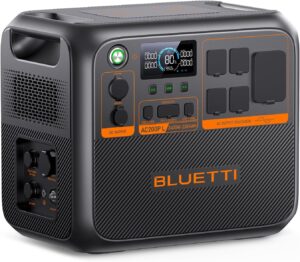
Known as a “portable power beast,” the BLUETTI AC200P is a 2000W (4800W surge) power station paired with a 2000Wh LiFePO4 battery. This is a legendary model among off-grid enthusiasts for its durability and versatile outputs. The AC200P weighs in at 60.6 lbs – so it’s at the upper limit of what we call “portable” (you can move it, but you won’t want to carry it far!). BLUETTI compensated by giving it integrated handles on the sides. Where the AC200P shines is in sheer output and expandability: it has 6 AC outlets, plus a 12V RV (TT-30) outlet for 25A service – you can literally plug your RV camper directly into this unit. It also offers multiple DC options (12V car, 12V aviation, USB-C, USB-A). Many users buy the AC200P as a home backup for critical devices or for van/RV use. It can run an efficient portable air conditioner (typically ~5000 BTU) for a couple of hours, or an electric drill, a circular saw, you name it – if it’s under 2000W, this brute can handle it. The LiFePO4 battery gives it a long life (~3500+ cycles) and better performance in extreme temps. For charging, it accepts up to 700W solar (or about 400W from the wall unless you get the newer AC200Max, which upgrades charging). One thing to note: it doesn’t have wheels, and at 60+ lbs you might station it somewhere and use it like a mini backup generator. A reviewer quipped that “at 60 lbs, you’ll want to put it in a central spot and leave it there”. If you require serious off-grid power with a pro-grade battery, the BLUETTI AC200P is a proven heavy-duty choice.
EcoFlow Delta Max 2000

Standout features:
– Surge Handling: 2400W inverter with up to 5000W surge means it can start heavy motor devices (fridge compressors, well pumps, etc.) without tripping. It’s arguably more “surge-proof” than some 2000W units.
– Fast Recharge: ~1.8 hours 0-100% on AC (uses 1800W input) – from the wall it refuels incredibly quickly, so you can top it up in short utility power windows. Also one of the best solar intakes (800W) in this class.
– Expandable Design: Can connect up to two Extra Batteries (each 2016Wh) – great for those who may upgrade later. Also integrates with EcoFlow’s gas generator for hybrid power.
– Smart Features: WiFi connectivity and EcoFlow app let you monitor usage, update firmware, and even set charging schedules or generator auto-start levels. High-tech for a battery box!
– UPS Mode: Can function as a UPS (uninterruptible power supply) with ~30ms switchover – not as instantaneous as a true UPS for sensitive electronics, but decent for keeping appliances on during a grid cut.
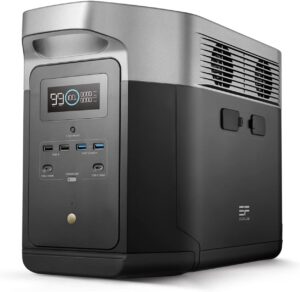
The EcoFlow Delta Max is a high-capacity, high-output station known for its flexible home integration. With 2400W output (5000W surge) and a base capacity of 2016Wh, the Delta Max can surge even higher than its 2kW peers – meaning it’s even better at handling motor startups and multiple heavy devices at once. It’s a bit lighter than some competitors at 48 lbs. The Delta Max’s calling card is its expandability: you can add extra battery packs to boost total capacity to 4 or 6 kWh for long outages. For many, that’s a big plus – use 2 kWh day-to-day, but have more juice when needed by connecting add-ons. This unit is also notable for fast charging: X-Stream technology charges it from 0 to 80% in just 65 minutes off AC, which is extremely fast for such a large battery. It accepts a whopping 800W solar input, so with a good solar array you can recharge in as little as 3-4 hours of sun. In terms of outputs, it has 4 AC outlets (2400W total), 2 USB-C (100W), 2 USB-A, and car/DC outlets. An interesting feature: it supports a home Smart Generator (EcoFlow sells a dual-fuel generator that can auto-charge the Delta Max when battery runs low – very handy for extended outages). Essentially, EcoFlow designed the Delta Max for whole-home solutions in mind, including an app to monitor usage remotely. For example, you can plug it into a transfer switch for home circuits – it’s that robust. In real user terms, a Delta Max can keep a home office running (PCs, monitors, internet) for well over a workday, or power an entire RV’s essentials (fridge, microwave, AC) via its 30A adapter plug. If you want a power station that edges into generator territory in capability, the Delta Max is a prime choice.
Geneverse HomePower Two Pro

Notable details:
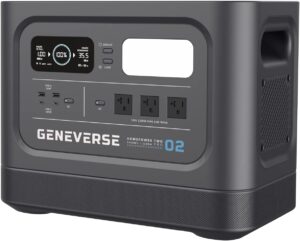
– Ultra-High Capacity: 2419Wh means on paper, it can run a 10 cu-ft refrigerator (~100W) for about 20+ hours, or a full-size fridge (~150-200W avg) around 15+ hours continuously. Great for overnight outages without having to ration much.
– LFP Battery: LiFePO4 chemistry for long cycle life (3000+ cycles) and better safety. You can recharge this unit weekly or use it off-grid daily and it will hold up for years.
– Emergency Prep Focus: Geneverse advertises up to “7 days of essential power” when used sparingly. The idea is you power only critical devices intermittently (fridge on/off, etc.) to stretch that big battery. Also, it can hold charge in storage for up to a year (though top-ups every 6 months are recommended).
– Physical Design: Two wheels and a handle help because, at 61 lbs, you wouldn’t want to deadlift it often. The form is a bit like rolling luggage. Also has an LED floodlight on the side for illumination.
– Outputs & Usage: With 2200W, it can handle things like multiple kitchen appliances together (coffee maker + microwave, for instance). Also enough to run a small window AC unit (~500W) in a pinch, or to keep a well pump cycling. Essentially, normal household plug-in items are fine. Only very large 240V items or whole-house HVAC are beyond its scope.
If home emergency power is your main goal, the Geneverse HomePower TWO Pro is built with that in mind. It’s a hefty 2200W output system (4400W surge) with a giant 2419Wh LFP battery. Essentially double the capacity of most 1kW units, it’s intended to keep a household running through multi-day outages. The TWO Pro is noticeably large and heavy – about 61.5 lbs (it has two wheels and a suitcase-like telescoping handle to move it). With 3 AC outlets, 2 USB-C (100W), 2 USB-A, plus a car socket, it covers all the bases for connectivity. Geneverse emphasizes that this unit can power “99% of home appliances.” While that might be a stretch (it won’t run central AC or 240V stove), it will definitely handle your kitchen appliances, medical devices, and most electronics. For example, you could run an energy-efficient space heater (on low ~750W) along with a refrigerator and some lights, all within its capability – try that on a smaller station and you’d overload. The HomePower TWO Pro also supports pass-through charging and solar input (up to about 800W). One interesting feature: it has an LCD that shows not just battery level but also gives usage time estimates for connected devices (to help manage your power). People who own this often praise the peace of mind it provides – e.g., keeping a loved one’s oxygen concentrator and a fan running through a hurricane outage, or powering a whole campsite’s worth of gear. It’s very much a “home backup in a box” solution. If you’re less concerned about portability and more about maximum home resilience, the Geneverse TWO Pro is a reliable, safe (LiFePO4 battery) option with a long shelf life. Keep it charged, and it’s ready when disaster strikes.
Anker 767 PowerHouse (SOLIX F2000)

Highlights:
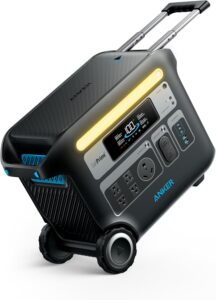
– Output & Capacity: 2048Wh LiFePO4, 2400W output (huge 12 devices at once, including that 30A RV port). Easily runs full-size microwave ovens (~1100W), portable heaters (1500W), or even small washing machines or power tool battery chargers on a job site.
– Durability: Rated for 3000 cycles to 80%. Operating temps -4°F to 104°F (battery is well-managed for cold), meaning it can be used in winter outages without issue. Rugged casing and shock-tested – “tough enough for the outdoors” as Anker says.
– Mobility: Collapsible luggage handle and big rubber wheels make it one of the easiest 2kWh units to maneuver despite weight. Roll it from garage to house, or from car to campsite with ease.
– Extra Battery Option: Can be expanded with an additional 2048Wh battery pack (sold separately) that plugs in, doubling capacity to 4096Wh. Good if you later decide you need more juice.
– User-Friendly: The interface is very intuitive. The app connectivity means you can check the station’s status on your phone, update firmware, and even control AC/DC outputs remotely. It also features an energy-saving mode where it turns off output if loads < 10W for some time, preventing unnecessary drain.
Anker, known for phone chargers, jumped into the heavy-duty arena with the 767 PowerHouse, a 2400W portable station with a 2048Wh LiFePO4 battery. This unit is sleek and extremely well-built, featuring a pull-out suitcase handle and big wheels for mobility – which you’ll appreciate because it weighs about 67 lbs (30.5 kg). The Anker 767 can surge up to 4800W, meaning it stands shoulder-to-shoulder with others in handling tough loads. One highlight: it has a 30A RV outlet (TT-30) in addition to four AC outlets, so RV users can plug their rig directly to power nearly everything onboard. The 767 also boasts an excellent app with Bluetooth/Wi-Fi connectivity for monitoring and controlling output, and it even supports “smart temperature control” – its fans adjust speed to keep noise down (and it runs quietly, around 30dB in eco-mode). This station is designed for both home backup and off-grid use. Charging is very fast via AC – about 1.4 hours to full thanks to Anker’s HyperFlash tech. It takes up to 1000W of solar input as well, which is higher than most (you could hook up, say, 4× 200W panels easily). Another unique feature: GaNPrime fast charging for devices – the USB-C ports are part of Anker’s GaN system, outputting up to 100W for laptops, etc., with high efficiency. Real-world, the Anker 767 is praised for its build quality and the confidence it inspires. It can run heavy kitchen appliances and power tools without a hiccup. For instance, one user ran a 1500W air fryer and an 800W bread maker simultaneously on it – total ~2300W load – and it powered through. The display is large and easy to read, giving time-to-empty info. If you want a refined, heavy-duty power station from a brand known for quality electronics, the Anker 767 is a top pick (it even comes with a 5-year warranty, reflecting confidence in its LFP battery longevity).