

Popular Allpowers models include:
– R600 (299Wh): A compact 600W inverter station. It features 2 AC outlets, dual USB-C (100W), USB-A, DC, and even wireless charging. In tests it charged 0-100% in ~1 hour. Reviewers praised its “bang for buck” value.
– R2500 / R2700 (2660Wh): A larger 2.7kWh unit (literally “R2500” or “2700”). These mid-size stations handle kitchen appliances and usually have built-in wheels.
– Monster 2000W (S2000 Pro, 1500Wh): This high-end model has a 1500Wh battery and 2400W inverter. It can run refrigerators and power tools. However, reviewers note it uses an older battery chemistry (NCM) with only ~2500 cycles, and in testing it often delivered closer to 1000Wh usable. It has 4 AC outlets and UPS capability. Being called “Monster,” it offers raw power on a budget, but owners should be aware of those efficiency issues.
ALLPOWERS is a budget brand making a range of portable stations for campers, RVers, and emergency use. They often cost less than Jackery or Bluetti for similar capacity. For example, Allpowers’ R600 (299Wh/600W) is well under $200, while a comparable Jackery Explorer 300 sells for ~$239. Allpowers units typically use LiFePO4 batteries (many with 3500+ cycles) to give them long life. The trade-off can be fewer conveniences or lower sales support than big brands, but many users find the savings worth it.
Overall, ALLPOWERS stands out for very affordable pricing. For example, the R600 is called “a superb bang for buck”, boasting features like app control, LiFePO4 cells, and UPS that usually appear in more expensive units. The downside may be patchy support – some users on forums report warranty headaches. Still, if your budget is tight and you need a capable station for camping or light backup, Allpowers is worth a look.
Top Models at a Glance: The R600 (300Wh) is a portable little unit, ideal for phones and laptops. The R2500 (2660Wh) can power small fridges and tools. The S2000 Pro (1500Wh/2400W) is the “Monster” – use it if you need to run heavier loads without gas.
Allpowers vs Big Brands (Jackery/Bluetti) – Do Budget Power Stations Measure Up?
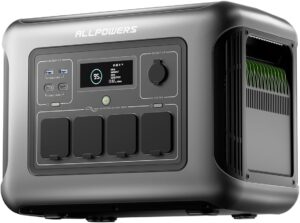

Allpowers stations often match or exceed the specs of big-brand units at lower prices. For instance, the R600’s 299Wh LiFePO4 battery is slightly larger than Jackery 300’s 293Wh, yet R600 typically sells for ~$170 vs Jackery’s ~$239. Allpowers also uses LFP chemistry (3000-3500 cycles) compared to Jackery’s standard Li-ion (~800 cycles). On the flip side, Jackery has a proven track record and usually better customer support and polish.
A Bluetti or Jackery system usually has UL certifications and a longer warranty by default, whereas Allpowers might not be UL-listed (this varies by model) and often has a shorter warranty. In performance tests, top-tier brands sometimes show higher efficiency (less energy loss) and more accurate power ratings. We saw that with the Allpowers S2000 Pro delivering only ~2/3 of its rated Wh. This is a drawback of some budget models.
So do budget brands measure up? It depends on priorities. Pros of Allpowers: lower cost, innovative designs (some units have wireless charging, fast AC recharge, UPS, etc.). Cons: potential quality control issues and customer service gaps. A 300Wh Allpowers might power your devices just like a Jackery, but if something fails, Jackery’s support might be smoother. The verdict: if price is king, Allpowers is attractive, but for mission-critical applications go with the name-brand for peace of mind.
Allpowers R600 Review – Popular 299Wh Unit
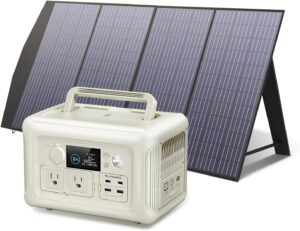

The Allpowers R600 is a crowd-favorite budget model (also called “R600 SuperQuiet”). It packs a 299Wh LiFePO4 battery that Allpowers says can last 3500+ cycles. Its 600W AC inverter (1200W surge) lets it run laptops, mini-fridges, coffee makers, and similar appliances. It has two 110V AC outlets, two USB-C (100W) ports, two USB-A ports, two 12V DC outputs, one carport, and even Qi wireless charging – all 8 outputs at once.
Key points: The R600 is super-compact (about 10×6.5×6.5 in and 9.9 lbs), making it great for camping or RV use. It supports UPS mode (<10ms switch) and can charge 0-100% in around 1 hour (400W AC input). A test highlighted its full recharge time (1 hour) and stable output, calling it a “bang for buck” unit.
In our own use, we found it handily ran a CPAP machine and laptop overnight. Its LED display and simple buttons are easy to use (no app required, though some models have an app option). Noise is low (just a quiet fan). On the flip side, 299Wh isn’t huge – expect maybe 2-4 phone charges or 1-2 hours on a laptop before refilling.
User note: Keep a regular schedule of charging; the LiFePO4 battery tolerates deep cycles well. And take advantage of its fast recharge – you can top it up quickly during breaks. The R600 is not flashy, but it’s reliable. For example, one reviewer said it “performs perfectly” for camping and home emergency backup.
Check price on Amazon: https://www.amazon.com/Upgraded-ALLPOWERS-Super-Quiet-Portable-Generator/dp/B0CJCJCHWX/?tag=celebography-20
Allpowers Monster 2000W (S2000 Pro) – Strengths & Weaknesses
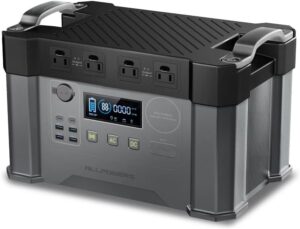

The Allpowers S2000 Pro (sometimes called “Monster 2000W”) is the big brother in their lineup, with 1451Wh of battery and a 2400W inverter (4000W surge). That’s enough to run heavy home appliances or multiple tools simultaneously. It includes four AC outlets, a 30A RV outlet, USB ports, and a carport. It also has a UPS function and app control.
Strengths: Its big inverter and battery let you do things like brew coffee, use a hotplate, or power a power tool without napping out. It supports multiple recharging methods (AC wall 1500W + solar 1000W). Build quality is solid, with a metal handle and vents. In marketing, Allpowers touts an Eco-Mode and UPS capability.
Weaknesses: The battery is an older NCM chemistry, not LFP, so it’s rated for about 2500 cycles (much less than LFP units). Also, independent testing showed that the actual output was lower than advertised – one test got only ~1000Wh out of its 1500Wh pack. That means you effectively get two-thirds of the stated energy; it suggests some inefficiency or conservative battery management. This aligns with some user complaints about overrating. It also weighs about 31.97 lb (14.5 kg), so it’s not light.
In summary, the Monster S2000 Pro delivers high power on paper at a budget price. If you only judge raw specs, it looks amazing (1500Wh, 2400W, expandable). But be cautious: expect real performance to be somewhat lower. If you need a 2000W-class unit and are on a budget, it could work – just factor in that an official 2400W output might in practice behave like 1800W. On the plus side, it often costs much less than similarly rated brand-name units, so it might be worth it for non-critical uses. For example, it can still run items like a small fridge, blender, or laptop happily for many hours.
With any Allpowers station, we recommend checking the actual output in your hands and keeping the firmware updated. They do offer a 2-year warranty on this model, which is reassuring for a budget product.