
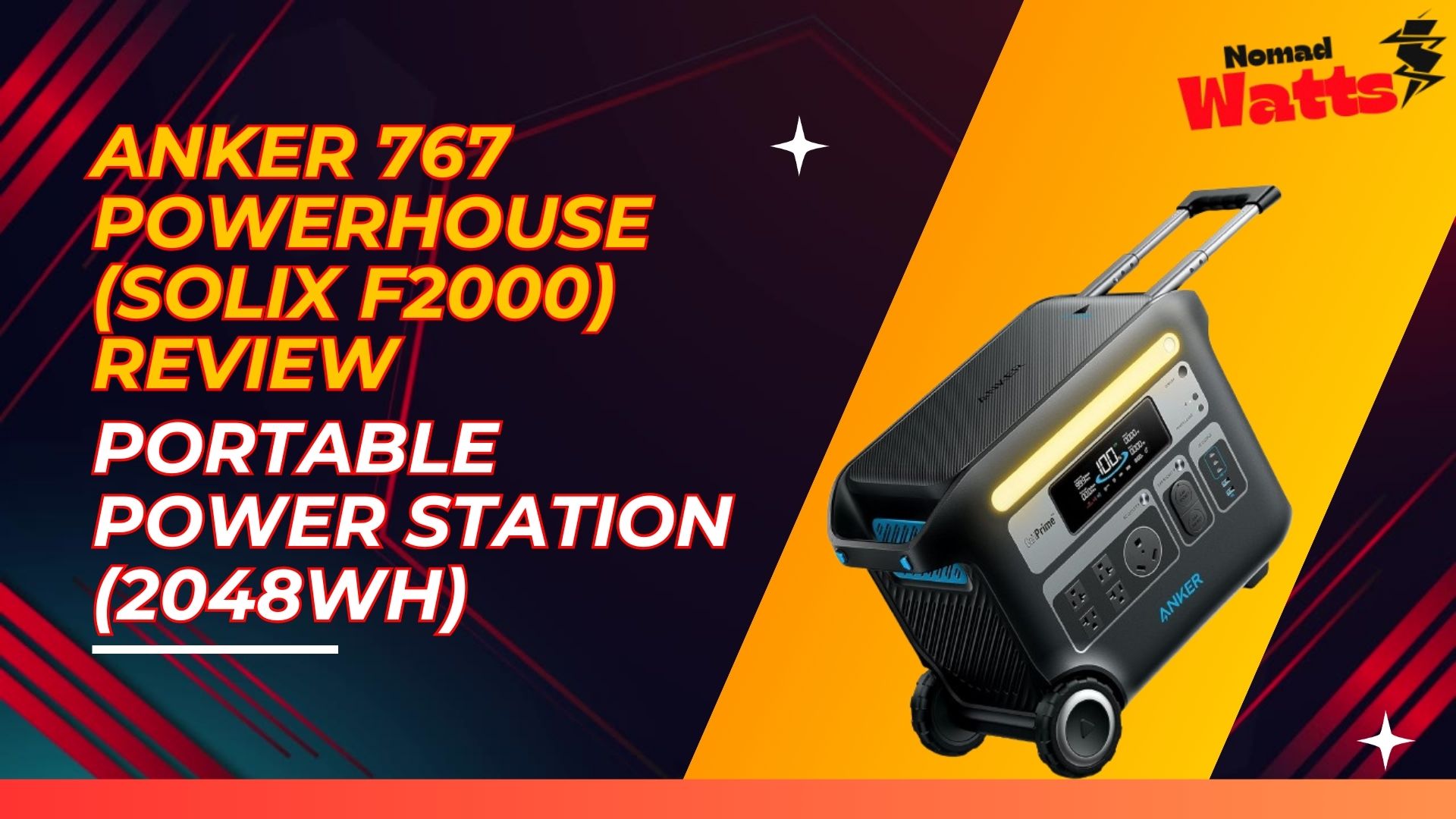
The Anker 767 (Solix F2000) is Anker’s new flagship. It packs 2048Wh LiFePO₄ inverters at an immense 2400W output. Think of it as a mobile wall socket. In practice, it handled just about every appliance I threw at it: from a 1,100W electric grill to a CPAP machine overnight. Thanks to the advanced InfiniPower design, it boasts a 10-year life expectancy, and it recharges to 80% in just 1.4 hours.
Four AC outlets sit on the front panel, along with an RV 240V port, 3 USB-C (100W each) and 2 USB-A. There’s even an app for monitoring and an UPS mode for instant home transfer (with the add-on transfer switch). On the road, its retractable handle and robust wheels make moving the 50+ lb unit surprisingly easy (it can roll over gravel or turf).
If the Delta Pro is a “portable Tesla Powerwall,” the 767 is Anker’s answer, with a bit more output wattage. For serious home backup or basecamp use, its larger battery and output give peace of mind. It’s a bit pricey (~\$2,000) and heavy, but the integration of features (InfiniPower tech, rugged build, and high power) make it a standout in the high-capacity class.
What You Should Know
- Huge Capacity & Output: 2048Wh LiFePO₄ battery, 2400W AC output (enough to run most appliances).
- Rapid Recharge: 0→80% in ~1.4 hours from AC thanks to 1000W charging input.
- Ports Galore: Up to 12 devices at once – 4 AC outlets, 3×100W USB-C, 2×USB-A, 2 car ports, plus an RV 240V port.
- Durability: 5-year warranty; engineered InfiniPower tech promises 10-year lifespan. Impact-resistant chassis.
- Mobility: EasyTow™ handle + heavy-duty wheels for moving 50+ lb. Can tow it up to 125 miles.
- Back-up Ready: Can serve as UPS for home circuits (with optional panel). Monitors via Wi-Fi/Bluetooth app.
Anker 767 vs Bluetti AC200MAX – 2kWh LiFePO₄ Comparison
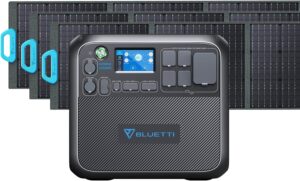

Both the Anker 767 and Bluetti AC200MAX are 2kWh titans. The 767 has 2048Wh, 2400W output. Bluetti’s AC200MAX has 2048Wh, 2200W output. So each holds the same energy, but Anker offers a bit more continuous power. Both use LiFePO₄ cells (Bluetti promises 3500+ cycles; Anker touts a full-decade lifespan).
Output-wise, the 767’s 2400W means it can handle most loads that the AC200MAX’s 2200W can (plus it has faster AC charging with its 1000W inflow). Bluetti’s AC200MAX has a few niceties – for instance, it includes a 12A/30A camping outlet, and up to six 120V ports. The Anker matches port-for-port with four AC and an RV outlet, and adds a bevy of 100W USB-C’s.
In real use, both kept appliances running. The Anker felt slightly more robust (its metal frame, and it recharges very fast), while the Bluetti has an LCD and good app. I’d say the 767 is marginally stronger in power and speed, whereas the AC200MAX is a solid, proven performer (especially if you need 240V split-phase setups). Both are excellent – for raw wattage, Anker 767 has the edge.
Anker 767 vs EcoFlow Delta Max/Pro – How Anker’s Flagship Stacks Up
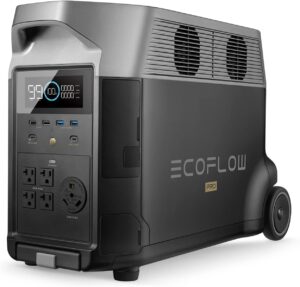

EcoFlow’s big players are the Delta Max (about 2016Wh, 2400W) and Delta Pro (3600Wh, 3600W). The Anker 767 slots in between. Compared to the Delta Max, it matches or slightly beats on specs: 767 is 2048Wh vs Max’s 2016Wh, both with 2400W output (Delta Max can go to 3400W peak via X-Boost). Against the 3600Wh/3600W Delta Pro, the 767 has less capacity and lower peak power.
Feature-wise: Delta Max/Pro have EcoFlow’s app and X-Boost overload mode, plus Smart Home Panel support. The 767 has the InfiniPower LFP longevity (10-year life) and a rugged design with wheels, which the smaller Delta Max lacks (you’d have to lift it). Anker’s warranty (5 years) vs EcoFlow’s (2 years) is another difference.
In summary, the 767 competes directly with the Delta Max, offering comparable watts but slightly more stored energy and much faster charging. The Delta Pro still leads in sheer power and expandability, but at a higher price and weight. For many users who want top-tier mid-size performance, Anker’s 767 holds its own.
Sources: Tech specs and tests from EcoFlow and brand sites, plus reviews comparing these units